Framekit templates
Start from a designer-made template
 Use template
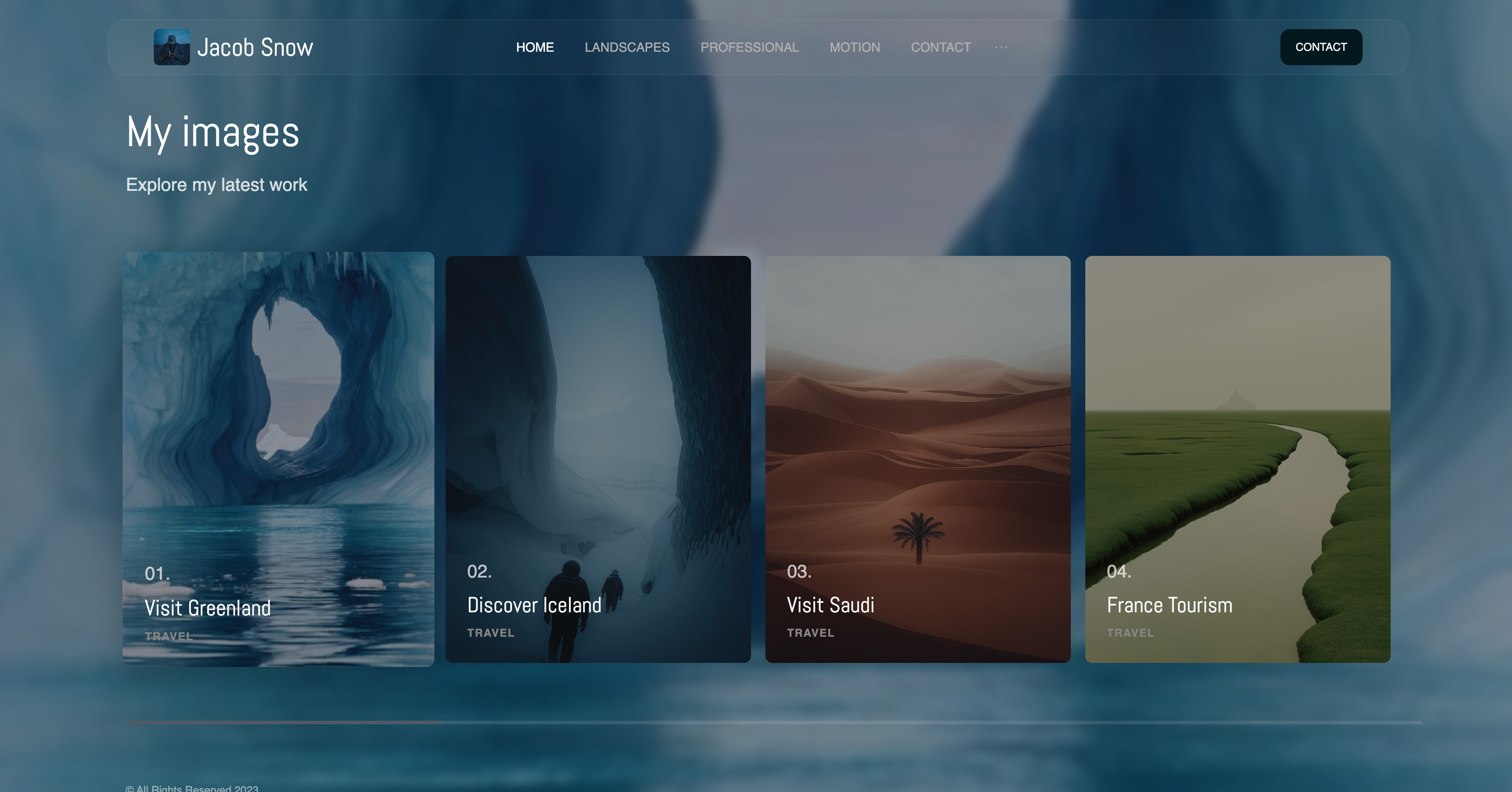 Use template
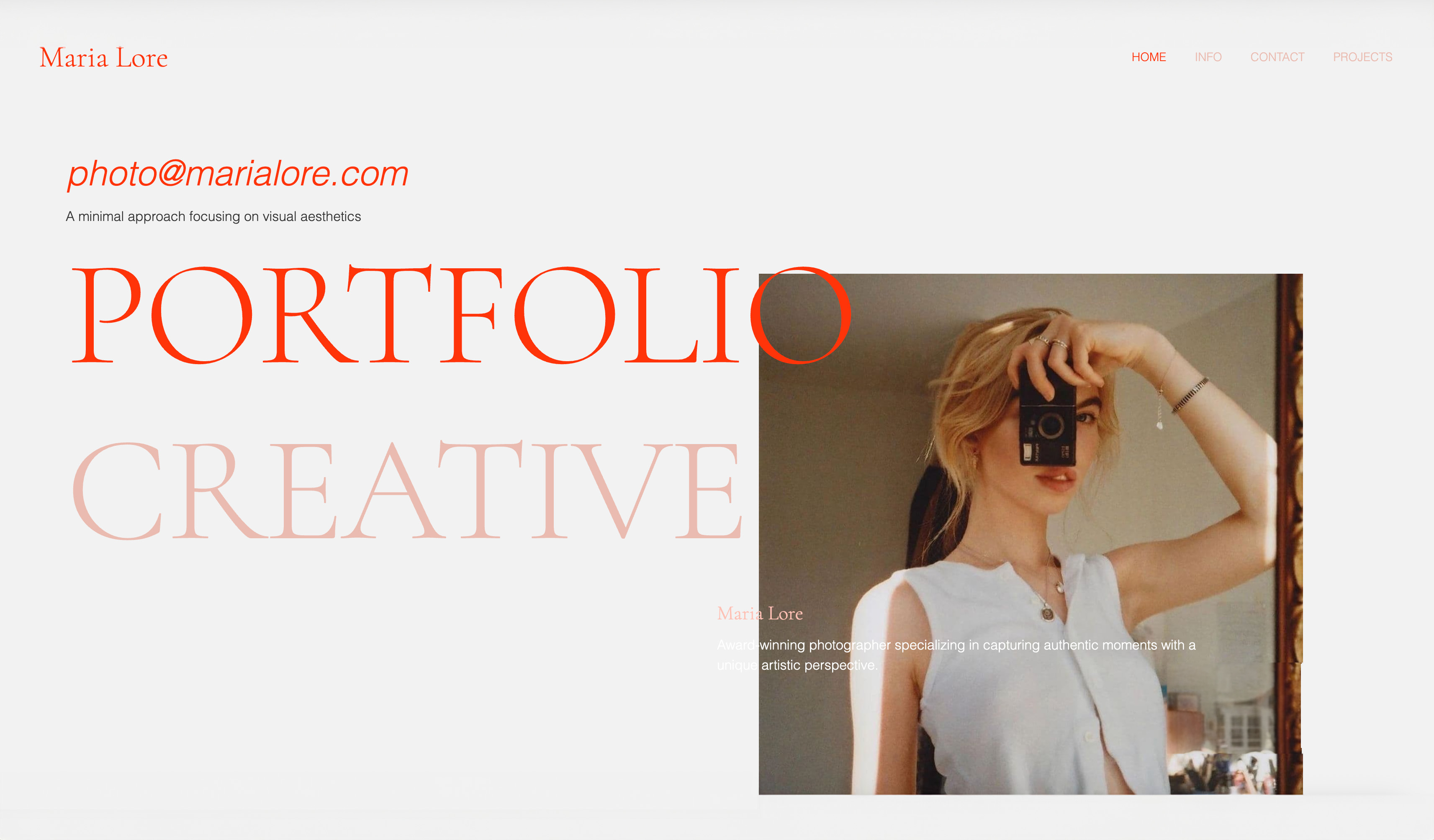 Use template
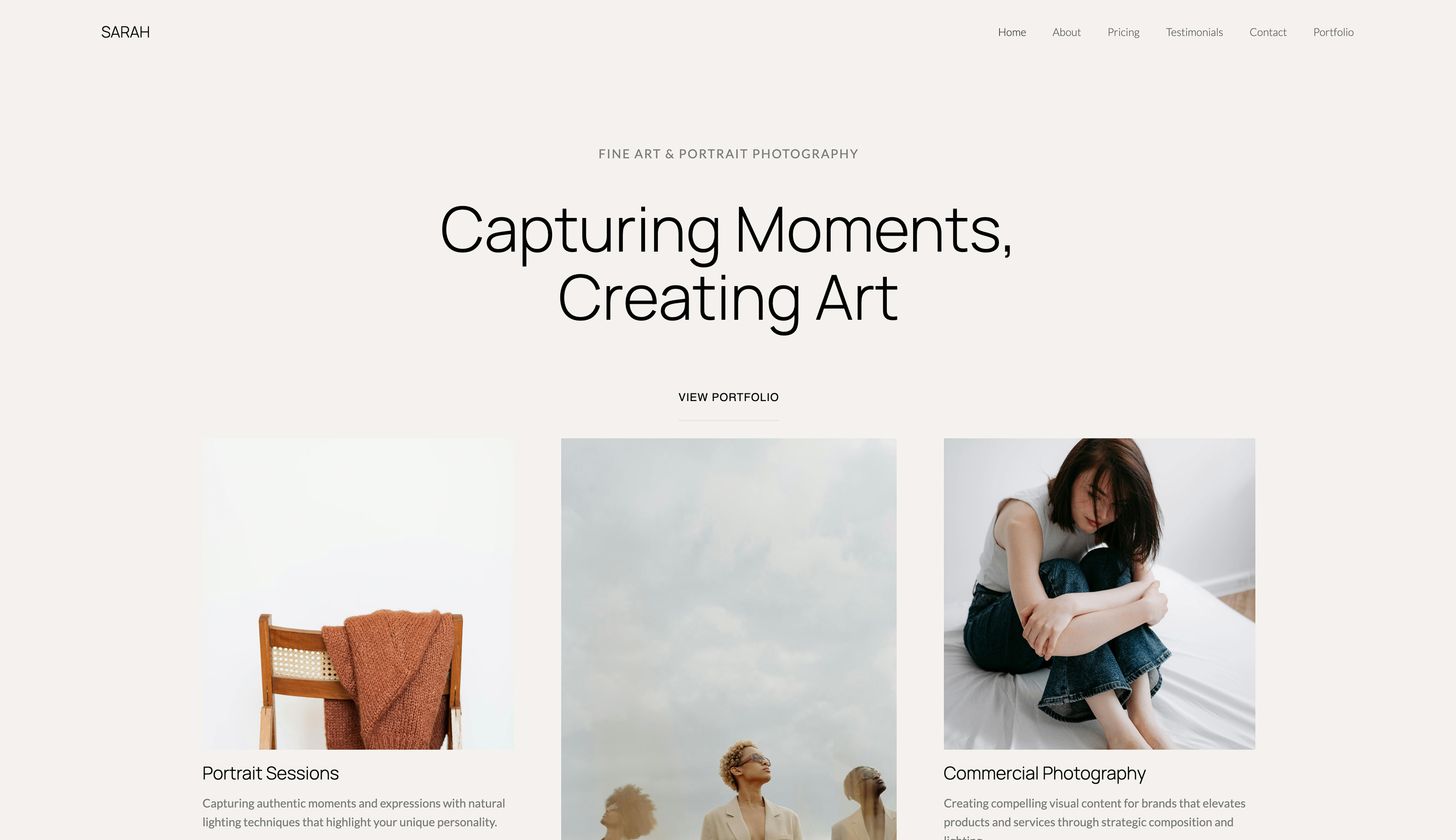 Use template
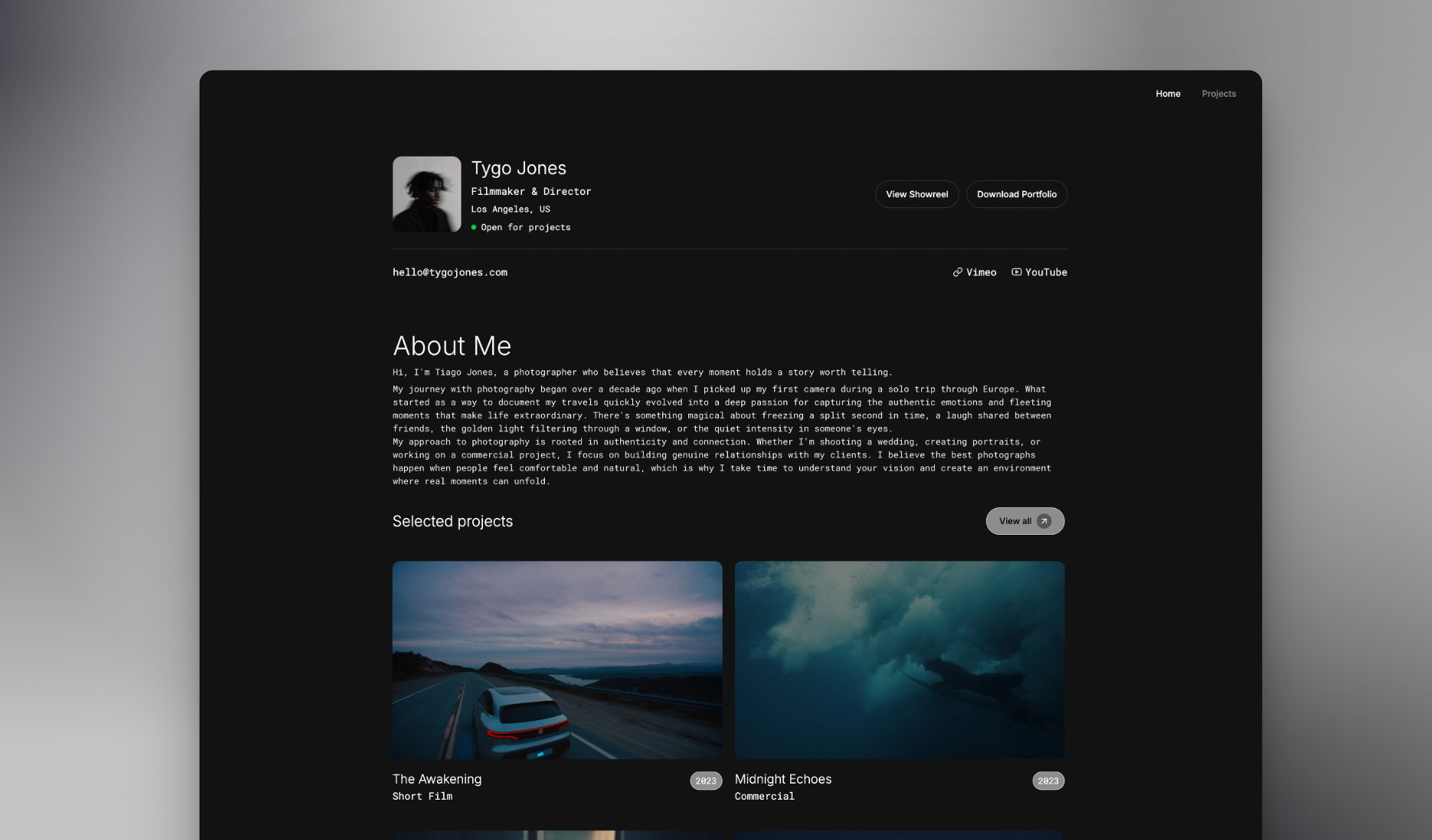 Use template
 Use template
 Use template
 Use template
Two photographers, equal skill. Both shoot beautifully. One stays booked, and the other keeps wondering why a portfolio full of strong images is not turning into work. The difference between them is almost never the photography.
It is the portfolio, and the quiet fact that a good portfolio and a folder of good photos are not the same thing.
Good photos are raw material. A good portfolio is what you build out of them: a set of decisions about which images to show, in what order, to whom, and how.
A photographer can have a hard drive full of excellent frames and still have a portfolio that does not work, because the portfolio was assembled, not edited.
This guide answers what makes a good photography portfolio in 2026, the six qualities that separate a portfolio that books clients from one that just displays nice pictures. None of them is about owning a better camera.
Framekit is an AI website builder that assembles a photography portfolio with the galleries, the client-facing pages, and the enquiry route already in place, so the presentation stops being the thing standing between the work and the client.
A good photography portfolio is not just a collection of good photos.
It shows a clear point of view, is tightly curated rather than complete, stays visually consistent, speaks to one kind of client, loads fast and reads easily, and makes the next step obvious. Good photos are the raw material. A good portfolio is the edit.
A good photography portfolio is a curated, coherent presentation of your work that makes a specific client want to hire you.
It is different from a strong body of photos, because a portfolio is judged not on the best single image in it, but on the decisions you made about which images to show, in what order, and for whom.
The six qualities below are those decisions, done well.
1. It Shows a Point of View, Not Just Skill
Technical skill is the price of entry, not the thing that books work. Plenty of photographers are technically excellent. What separates a good portfolio is a visible point of view: a recognizable way of seeing that runs through the images.
When a client looks at your portfolio and senses a consistent eye, a mood, a sensibility, they are not just hiring competence, they are hiring you specifically.
A portfolio that is technically flawless but stylistically anonymous reads like a stock library. One with a clear point of view reads as an artist worth booking, and worth paying more for.
Photographers who cannot yet name their own tend to find it by collecting rather than by shooting, pulling references and their own frames into one board until the repetitions become obvious, and that is the job mood board tools exist to do.
2. It Is Curated, Not Complete
A portfolio is not an archive, and the instinct to show everything decent is the instinct that weakens it.
A good portfolio is the result of hard editing: every image left in is there because it is genuinely among your strongest and best represents the work you want more of.
The photos you cut matter as much as the ones you keep, because a viewer judges you by the weakest image they see, not the best. Curation is itself a skill a client can read in the work.
The right number is smaller than most photographers think, which we cover in our guide on how many photos a portfolio should have.

3. It Is Consistent From First Image to Last
Consistency is what turns a set of good photos into a body of work. That means consistency of editing, a coherent color and tone treatment rather than ten different looks, and consistency of quality, with no noticeable dips between images.
A portfolio that swings between styles and standards tells a client they cannot predict what they will get from you. A consistent one tells them exactly what they are buying. Consistency is not sameness, and it is not boredom.
It is reliability, and reliability is a large part of what a paying client is actually looking for.
4. It Speaks to One Kind of Client
A good portfolio is built for a specific viewer. A wedding client, a brand, a family booking a session: each is looking for evidence that you do their kind of work, and do it well.
A portfolio that mixes weddings, real estate, food, and pets into one undifferentiated stream forces every client to wonder whether you are really focused on them.
A good portfolio leads with, and is organized around, the work you most want to be hired for. Specific is not limiting. It is what makes the right client feel certain they have found the right photographer.
5. It Is Effortless to Move Through
How the portfolio feels to move through is part of whether it is good. The work has to load quickly, especially on a phone, because a gallery that stalls loses the viewer before the photos even appear. The navigation has to be obvious.
The images have to be shown large enough to do them justice. None of this is decoration, it is the removal of every small friction between the viewer and the work. A good portfolio gets out of its own way.
The viewer should be thinking about your photographs, never about the website carrying them.
The opposite of this, and other quiet failures, appear in our guide to portfolio mistakes that cost creatives clients.
6. It Makes the Next Step Obvious
A portfolio that a client admires and then leaves has not done its job. The final mark of a good portfolio is that it converts: it makes the next step, getting in touch, checking availability, starting an inquiry, impossible to miss.
The work earns the interest, and a clear, repeated call to action turns that interest into a booking. A portfolio is not a gallery to be admired from a distance.
It is a tool built to get you hired, and a good one never leaves an interested client wondering what to do next.
Our guide on getting clients from your website covers that conversion step in depth.
The First Screen Decides More Than the Rest of the Site
In one linethe judgement a visitor makes of your portfolio is formed before they have consciously looked at anything, and it barely moves afterwards, which means the first screen is not the introduction to the work but very nearly the whole verdict.
The research here is unusually clear and unusually uncomfortable.
Lindgaard, Fernandes, Dudek and Brown at Carleton University ran three studies on how fast people judge the visual appeal of a web page, published in Behaviour and Information Technology as Attention web designers: You have 50 milliseconds to make a good first impression.
Participants rated pages shown for a twentieth of a second, and the finding that matters is not the speed on its own: ratings from the shortest exposure correlated highly with ratings from ten times the exposure, and with the participants' own ratings in a later phase.
The snap judgement and the considered one were substantially the same judgement.
For a photography portfolio that has three consequences, and none of them are about photography.
Your first three images are doing most of the work. Not your best three, the first three, and for most photographers those are not the same set.
Open your own portfolio and look at what is on screen before any scrolling happens. If your strongest image is fourth, it is being judged by the company it keeps.
Anything covering the work is expensive. A splash screen, an autoplaying intro, a newsletter modal on arrival, or a cookie banner that lands over the hero all spend the one moment that is not recoverable.
Whatever they gain, they gain it after the judgement has already been made.
Mobile is where the first screen is smallest. A hero that shows one strong image on a laptop often shows a logo, a menu, and a caption on a phone.
Check your own site on a phone and note what is actually visible before the first scroll, because that, not your homepage design, is what most visitors will judge.
The honest reading of this research is not that presentation beats photography. It is that presentation decides whether the photography gets looked at, which is a smaller claim and a more actionable one.
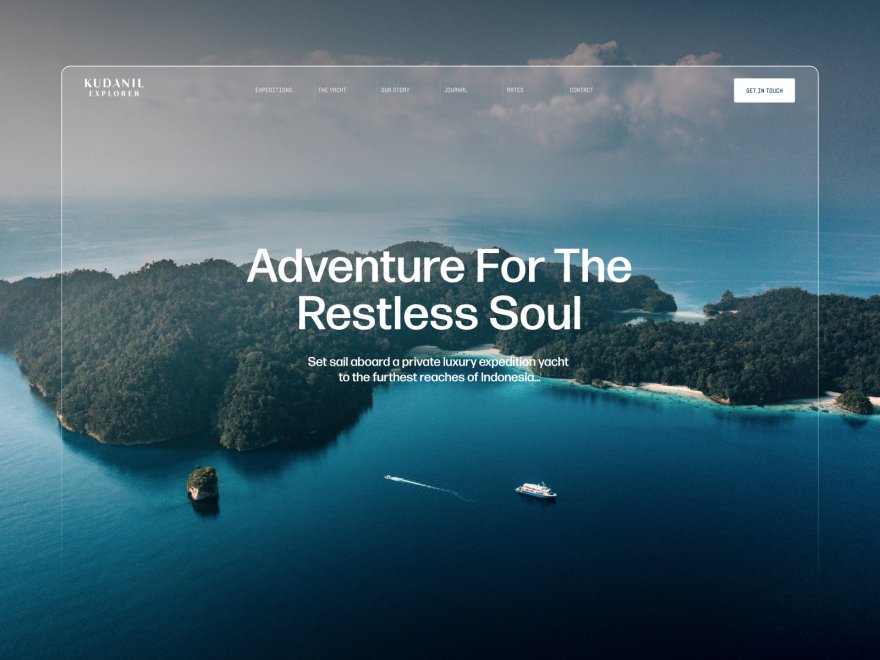
The 9 Marks of a Good Photography Portfolio
The six qualities above break down into nine concrete marks you can check your own portfolio against.
| # | Mark of a good portfolio | In short |
|---|---|---|
| 1 | A clear point of view | A recognizable way of seeing |
| 2 | Hard curation | Only your genuinely strongest work |
| 3 | The right, smaller number | Quality chosen over volume |
| 4 | Consistent editing | One coherent color and tone |
| 5 | Consistent quality | No noticeable dips between images |
| 6 | A focus on one client type | Built for a specific buyer |
| 7 | Fast, mobile-friendly delivery | No friction reaching the work |
| 8 | Clear, obvious navigation | Easy and quick to move through |
| 9 | An unmissable next step | Converts interest into inquiries |
If your portfolio clearly hits all nine, it is good. If it misses three or four, that is your to-do list, and none of the fixes require new photography.
Score Your Own Portfolio Against the Nine
In one linethe nine marks are only useful if you turn them into a number, because a vague sense that your portfolio is fine is exactly what stops people fixing it.
Go through the table above and give yourself one point per mark, honestly, using these tests rather than your own impression.
Point of view. Show five of your images to someone who does not know your work and ask them to describe what you photograph and how, in one sentence. If they can, take the point. If they describe the subjects but not the approach, you do not have one yet.
Hard curation. Look at your weakest included image. Would you be happy being hired on the strength of that one alone? If not, no point, and you have also just found what to cut.
The right number. Count. Fifteen to thirty for a general photography portfolio, twelve to twenty for a specialist.
Our guide on how many photos a portfolio should have covers the per-discipline counts.
Consistent editing. View your gallery as thumbnails at a small size where composition disappears and only tone remains. Colour and contrast drift is obvious at that scale and invisible at full size, which is why people miss it.
Consistent quality. Ask someone to pick the three weakest. If they pick three you already suspected, take the point. If they pick ones you thought were strong, your floor is lower than you think.
One client type. Read your homepage line aloud. Does it name a kind of buyer? "Wedding photography in Copenhagen" does. "Photographer and visual storyteller" does not.
Delivery. Open your site on a phone, on mobile data, away from your home network. Note what is visible before the first scroll and whether the galleries are comfortable to move through with a thumb.
Navigation. Hand your phone to someone and ask them to find your rates. Time it silently. If it takes more than a few seconds, no point.
The next step. Is there a visible way to contact you without scrolling to a footer, and does it say what happens next rather than the word Contact?
Reading the score. Seven or more and your portfolio is working; the remaining marks are refinements. Five or six and it is decent work presented in a way that is losing some of it.
Four or below is worth treating as good news, because everything on that list is fixable in a weekend and none of it requires taking a single new photograph.
Where This Advice Does Not Apply
In one lineevery rule above assumes you are trying to be hired by clients, and if you are not, several of them are actively wrong.
This is worth saying plainly, because portfolio advice is usually written as though there were one goal.
If you are applying to galleries or grants, coherence beats range even harder. A body of work is judged as a body, and the advice to speak to one kind of client becomes the advice to have one idea.
The commercial framing on this page, with its rates and enquiry routes, is beside the point.
If you are a student or early career, breadth is doing a job. Showing you can handle several kinds of assignment has value when nobody is yet hiring you for a specialism, and narrowing too early can cost you the work that teaches you which specialism you want.
If your portfolio exists to record your own practice, ignore most of this. Curation for an audience and curation for yourself are different activities, and there is nothing wrong with a site that is a personal archive.
It just will not produce enquiries, and it should not be judged as though it were trying to.
And the limit of any of it. A portfolio that scores nine out of nine and gets forty visits a month will produce nothing, because presentation only converts attention that already exists. If nobody is arriving, the problem is not on this page.
Why This Gap Catches Out Good Photographers
The reason talented photographers end up with weak portfolios is not carelessness. It is that the skills are genuinely different. Taking a strong photograph is a creative and technical skill.
Building a good portfolio is an editorial one: stepping back from your own work, judging it coldly, cutting your favorites, and arranging what is left for a stranger rather than for yourself.
Those are different muscles, and being excellent at the first does nothing to develop the second.
That is also why the gap is so fixable. You do not need to become a better photographer to have a better portfolio. You need to become a better editor of the photographs you already have. That is a decision you make in an afternoon, not a talent you wait years to acquire.
Frequently Asked Questions
What makes a photography portfolio good?
A good photography portfolio shows a clear point of view, is tightly curated to your strongest work, stays visually consistent, is built for one kind of client, is fast and easy to experience, and makes the next step obvious.
It is defined by the editing decisions behind it, not by the single best photo in it. Good photos are necessary but not sufficient.
Is a good portfolio about the photos or the presentation?
Both, and they are not separable. Strong photos are the raw material, but a good portfolio is the result of how they are curated, ordered, made consistent, and presented.
Excellent photos shown in a bloated, inconsistent, hard-to-navigate portfolio still underperform. The presentation is not decoration. It is the part that turns good photos into a portfolio that books work.
How is a good portfolio different from just having good photos?
Having good photos is owning strong raw material.
A good portfolio is what you build from it through editing: choosing which images to show, cutting the weaker ones, ordering them, keeping them consistent, and aiming them at a specific client.
A photographer can have a hard drive of excellent frames and still have a weak portfolio, because the portfolio was assembled rather than edited.
Should a photography portfolio show one style or many?
One, if you want to be hired for something specific, and the exception is genuine.
A client is not assessing your range, they are assessing whether you will reliably deliver their kind of picture, and mixed work makes that assessment harder rather than easier.
The real exception is early-career work, where breadth is doing a job because nobody is hiring you for a specialism yet. If you truly shoot several genres well, give each its own named gallery rather than mixing them in one.
How many photos should a good photography portfolio have?
Most good photography portfolios show 15 to 30 strong images in total, organized into galleries of 8 to 12.
The exact number matters less than the principle: every photo must earn its place, and a viewer judges you by the weakest image shown. Fewer, stronger photos almost always make a better portfolio than a larger, uneven one.
Does the website matter, or just the photos?
The website matters, because it is how the photos are experienced. A portfolio that loads slowly on a phone, is hard to navigate, or hides the contact step will underperform even with excellent images.
The website's job is to present the work with no friction and convert interest into inquiries. Good photos plus a poor site is still a poor portfolio.
How do I know if my photography portfolio is good?
Check it against the nine marks: clear point of view, hard curation, the right number, consistent editing and quality, a single client focus, fast mobile delivery, obvious navigation, and an unmissable next step.
View it on a phone as a stranger would. If it misses several marks, those are your fixes, and most are editing and structure decisions rather than new shoots.
How quickly do people judge a photography portfolio?
Faster than seems reasonable, and the judgement holds.
Lindgaard and colleagues at Carleton University found that visual-appeal ratings of a web page formed in about a twentieth of a second correlated highly with ratings given ten times as much viewing time, published in Behaviour and Information Technology.
The practical consequence for a portfolio is that your first three images matter more than your best three, and anything covering the work on arrival, a splash screen, an intro animation, or a signup modal, is spending the only moment that cannot be recovered.
How do I know if my photography portfolio is good enough?
Score it rather than sense it, because a vague feeling that it is fine is what stops most people improving it. Take the nine marks on this page, apply a specific test to each rather than your own impression, and count.
Seven or more and it is working. Five or six and the work is better than the presentation.
Four or below and you have a weekend of fixes ahead of you that require no new photography at all, which is the cheapest improvement available to any photographer.
Does the presentation matter more than the photographs?
No, and the more accurate framing is that presentation decides whether the photographs get looked at properly. Nobody has ever been hired because of a well-built website with mediocre images.
Plenty of good photographers lose work because the first screen is a logo and a menu, the galleries drift in colour, or the weakest image is sitting third. Presentation cannot manufacture a point of view, and it can absolutely obscure one.
The Bottom Line
What makes a good photography portfolio is not a better camera or a rarer talent. It is the editing: a clear point of view, hard curation, consistency, a focus on one kind of client, a frictionless experience, and an obvious next step.
The two photographers from the start of this guide had equal skill. The one who stayed booked simply made better decisions about the portfolio. Those decisions are available to you too, and none of them require shooting anything new.
For the platform to build it on, see our roundup of the best website builders for photographers.
_Re-verified July 2026: the first-impression finding checked against the original Carleton University study rather than the secondhand versions of it that circulate._
Where the template comes from and what replacing it later costs is a separate question, covered in portfolio website templates and what they really cost.