Framekit templates
Start from a designer-made template
 Use template
 Use template
 Use template
 Use template
 Use template
 Use template
 Use template
 Use template
Here is the instinct almost every creative has when building a portfolio: more work shows more range, so include everything decent. It feels safe. It feels generous. It is also backwards, and it is the single most common reason a portfolio underperforms.
A portfolio is not an archive. It is an argument, and every photo you add either strengthens the argument or weakens it. A viewer does not average your work in some fair, generous way.
They are pulled toward the weakest thing they see, and they rarely scroll to the end. So the question of how many photos a portfolio should have is not really a numbers question.
It is a question about whether you trust your own judgment enough to leave your decent work out.
This guide gives the honest answer: how many photos a portfolio should have, broken down by type, why fewer almost always wins, and exactly how to decide which images make the cut.
Framekit is an AI website builder that generates galleries sized for a curated portfolio rather than an endless grid, so the structure nudges you toward the counts below instead of away from them, and the shots that did not make the cut can still go to the client in a separate gallery.
A portfolio should have far fewer photos than most people include.
For most photographers, 15 to 30 of your strongest images across the whole site is right, with 8 to 12 per gallery or project. Designers should show 4 to 6 deep case studies. The rule behind every number: each photo must earn its place.
A portfolio is a curated selection of your best work, not a record of all of it.
The number of photos it should have is therefore a curation decision, and curation, the skill of deciding what to leave out, is itself something clients judge you on. A smaller, sharper portfolio does not show that you have done less.
It shows that you know which of your work is best.
The Short Answer: How Many Photos a Portfolio Should Have
For most photographers, a portfolio should show 15 to 30 photos in total across the whole site, and 8 to 12 within any single gallery or project.
For designers and other creatives whose work is presented as case studies rather than single images, the count is lower still: 4 to 6 strong projects shown in real depth beats a dozen shown shallow.
Those are starting ranges, not hard rules, and the right number for you sits somewhere inside them depending on how consistently strong your work is. But notice how low the ranges are.
Almost every portfolio that has a problem has too many photos, not too few.
Why Fewer Photos Almost Always Wins
More photos feel safer. They are not. Three things happen when a portfolio is too large.
The average drops, because a viewer's impression is shaped by the weakest images as much as the strongest, and every mediocre photo quietly pulls the whole portfolio down toward it.
The viewer never finishes, because attention is short, and a long gallery means your best work sits unseen near the bottom. And it signals weak judgment, because curation is a professional skill and a client can tell whether you have it.
A tight portfolio is not you having less work to show. It is you making a confident decision, and that confidence is part of what a client is paying for.
It is also why a bloated portfolio appears on every list of portfolio mistakes that cost creatives clients.
How Many Photos by Portfolio Type
The right number shifts with what kind of work you show and how you show it. Each discipline below gets its own count, and the pattern across all of them is the same: enough to prove consistency, never so much that a weak piece slips in.
| Portfolio type | Total to show | Per gallery or project |
|---|---|---|
| Photography portfolio (general) | 15 to 30 | 8 to 12 |
| Wedding photographer | 20 to 35 | 10 to 15 per featured wedding |
| Single-niche specialist | 12 to 20 | 8 to 12 |
| Designer (case studies) | 4 to 6 projects | Depth over image count |
| Filmmaker | 6 to 12 projects | One reel plus project pages |
1. General photography portfolio: 15 to 30 images
Fifteen to thirty images across the whole site, in galleries of eight to twelve.
Below fifteen a client cannot tell whether you are consistent or lucky; above thirty you are asking someone to keep forming an opinion long after they formed one.
If you shoot several genres, split them into named galleries rather than mixing them, because a viewer judging your portrait work should not have to scroll past architecture to do it.
2. Wedding photographer: 20 to 35 images
Twenty to thirty-five in total, with ten to fifteen from each featured wedding. Couples are checking one thing above all: that you can cover a whole day consistently, not that you can take one beautiful frame.
Two or three weddings shown properly beats eight shown partially, because the completeness is the proof. Full galleries belong behind a client login rather than in the public portfolio.
3. Single-niche specialist: 12 to 20 images
Twelve to twenty, in galleries of eight to twelve. Specialists get the smallest number in this list on purpose.
If you only shoot food, or only shoot interiors, every image is being compared against the others in the same category, so a weak frame is far more visible than it would be in a mixed portfolio.
Ruthlessness pays more here than anywhere else.
4. Designer: 4 to 6 case studies
Four to six projects, and image count is the wrong measure entirely. What a design client is buying is reasoning, so each project needs a brief, the constraints, the rejected directions, and the outcome.
Two projects with that depth beat six galleries of finished screens, because the screens show what you made and the case study shows how you think.
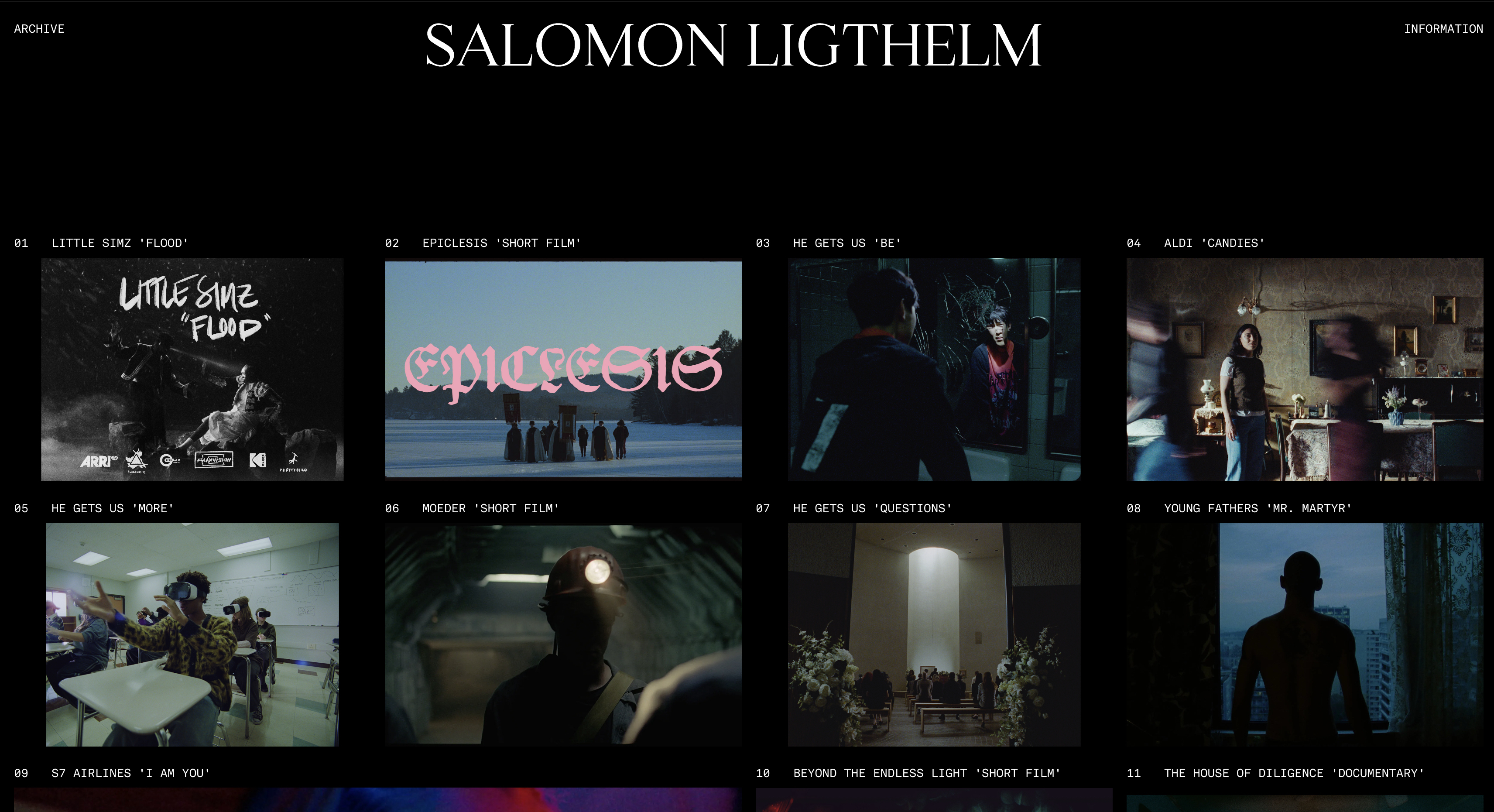
5. Filmmaker: 6 to 12 projects
One reel plus six to twelve project pages. The reel does the first ten seconds of work and the project pages do the rest, giving a producer the context to judge whether you have handled their kind of job.
Filmmakers have their own version of this question, covered in our guide on what a filmmaker portfolio should include.
6. Student or first portfolio: 6 to 10 pieces
Six to ten, and this is the one case where the honest advice contradicts instinct. A student portfolio is usually judged on its weakest inclusion, because a reviewer assumes the weakest piece represents your floor.
Cutting your two weakest projects raises your average more than adding a ninth does, and it is free. Our best portfolio websites for students guide covers where to put them.
How to Decide Which Photos Make the Cut
Curation is a series of honest questions asked of every single photo. Does this represent the work I want more of? A technically fine photo of a job you never want to repeat does not belong.
Is this genuinely among my best, or am I just attached to it? Sentiment is the enemy of a good edit. Does it repeat something already shown? Two similar photos do the job of one and dilute both.
Would I be glad to be hired to shoot this exact thing again? If a photo survives all four questions, it stays. If it hesitates on even one, it goes. The portfolio is simply what is left standing.
A Culling Method You Can Actually Repeat
In one linethe reason portfolios grow is that cutting requires a judgement and adding does not, so use a process that makes the judgement mechanical rather than emotional.
Every photographer knows they should cut and almost nobody does, because each individual image has a reason to stay. These four passes remove the reason.
Pass one: the stranger test. Show the set to someone who does not know you and ask which three they would remove. Do not explain any of them first.
The images people cut without hesitation are almost never the ones you expected, and the ones you feel the need to explain are the ones to lose.
Pass two: the client test. For each image, ask whether it would help win the kind of work you want more of. A technically excellent photograph of a subject you never want to shoot again is actively working against you, because it will bring you more of that work.
Pass three: the pairs test. Find every pair that does the same job, same subject, same light, same mood. Keep one. Portfolios bloat through near-duplicates more than through genuinely weak work, and a viewer reads the second one as repetition rather than range.
Pass four: the floor test. Rank what is left and look at the bottom one. If you would be uncomfortable being judged by that image alone, cut it, then look at the new bottom one.
Repeat until the bottom image is one you would happily be judged by. That is your portfolio, and it is usually smaller than you expected.
Do this twice a year rather than continuously. A portfolio that changes weekly is a portfolio nobody has decided about.
Signs Your Portfolio Has the Wrong Number
You can usually feel the wrong number before you count it.
Too many photos shows up as a gallery you scroll and scroll, near-identical images back to back, work spanning styles you no longer even offer, and a vague sense that the site is tiring to get through.
Too few, which is far rarer, shows up as a viewer not getting enough to trust your consistency, usually when a portfolio drops below six or eight images in total. Most creatives are nowhere near too few.
If you genuinely cannot tell which way you err, you almost certainly have too many, because nearly everyone does.
Where the Cut Photos Should Go
Cutting hard raises an obvious worry: all that decent work, just gone? It does not have to disappear. It simply should not live in the main galleries a stranger judges you by, and there are better homes for it.
Social platforms are the natural place for the wider stream.
Instagram and similar feeds reward volume and frequency in a way a curated site does not, so the strong-but-not-best images that did not make the cut can run there, keeping you visible without diluting your main showcase.
The feed is the wide net. The site is the tight one.
A client-specific selection is another good use. When you pitch a particular client, you can assemble a small, private set tuned to exactly their job, drawing on work that is not in your public galleries at all.
That is more persuasive than any general showcase, because it is built for one viewer with one need.
Some creatives also keep a deliberately separate, low-key archive: a single "more work" page, clearly secondary, for the genuinely curious. The key word is secondary. It must never compete with the main galleries for attention, and most visitors should never need to open it.
And some photos simply retire, which is healthy. Work from a style you have moved past, or a job you would not take again, has already done its job. Letting it go is not a loss, it is the same editing instinct that made your best work good, turned on your own catalogue.
The mindset shift is the real point. A tight public showcase and a large body of work are not in conflict. You can have made thousands of images and still choose to show thirty. Cutting is not throwing work away.
It is deciding, on purpose, what a stranger sees first, and sending everything else somewhere it still works for you without weakening the argument your strongest images are making.
Frequently Asked Questions
How many photos should a portfolio have?
For most photographers, a portfolio should show 15 to 30 strong photos in total, with 8 to 12 in any single gallery or project. Designers showing case studies need only 4 to 6 projects, presented in depth.
The exact number matters less than the principle: every photo must earn its place, and a tighter portfolio almost always outperforms a larger one.
How many photos should be in a single portfolio gallery?
A single gallery or project usually works best with 8 to 12 photos. That is enough to tell the story of the shoot or project and show consistency, without losing the viewer partway through.
Wedding photographers can run slightly higher, around 10 to 15 per featured wedding, since a wedding is a longer story. Beyond those ranges, extra images dilute the strong ones.
Is it bad to have too many photos in a portfolio?
Yes, and it is the most common portfolio problem. Too many photos lowers the average impression, since viewers are pulled toward the weakest images, and it buries your best work where most people never scroll.
It also signals weak curation, a skill clients notice. A portfolio that is too large almost always converts worse than the tighter version of itself.
How many photos should a photography portfolio website have?
A photography portfolio website usually works best with 15 to 30 photos total, organized into galleries of 8 to 12. Specialists in a single niche can go lower, around 12 to 20.
The website should show your range and consistency quickly, then get out of the way. If a visitor has to scroll through dozens of images, the site has too many.
How many projects should a design portfolio show?
A design portfolio should show 4 to 6 strong projects, presented as proper case studies rather than single images. Designers are hired for thinking and process, so depth on a few projects beats a long list of thumbnails.
Each case study should explain the problem, your role, and the outcome. Six excellent projects shown well outperform a dozen shown shallow.
Should I show every type of photography I do?
No. Showing every type you can shoot makes a client unsure what you specialize in, and specialists win bookings over generalists. Lead with the work you most want more of, and keep the portfolio focused on that.
You can take on varied work without putting all of it on display. The portfolio should advertise the future you want, not document the past you had.
How do I decide which photos to cut from my portfolio?
Ask four questions of every photo: does it represent work I want more of, is it genuinely among my best rather than just sentimental, does it repeat something already shown, and would I be glad to be hired to shoot it again.
Keep only the photos that pass all four. Cutting is uncomfortable, but the photos you remove are what make the rest look stronger.
How many photos should a student portfolio have?
Six to ten pieces, shown properly.
Student portfolios are judged by their weakest inclusion, because a reviewer reasonably assumes the weakest piece represents your floor rather than an off day, so cutting your two weakest projects raises your average more than adding a ninth does.
That is also the cheapest improvement available to you, since it costs nothing and takes an afternoon.
Does a bigger portfolio rank better in search?
No, and the assumption is worth killing because it drives a lot of bad decisions.
Search visibility comes from your pages being findable and specific, not from image volume, and a hundred untitled gallery images produce no more search value than fifteen with real captions and page structure.
Adding weak work to help SEO is a trade of the thing clients judge you on for a benefit that does not exist.
Should I show the same photo in more than one gallery?
Rarely, and only if it genuinely does a different job in each.
Repetition reads as a thin body of work even when the work is not thin, because a viewer moving between galleries notices the same frame and concludes you had nothing else to show.
If an image is strong enough to appear twice, it is strong enough to lead one gallery and be absent from the other.
How often should I update my portfolio?
Twice a year is a sensible floor, and the more useful rule is to replace rather than append. A portfolio that only grows accumulates your history instead of representing your current standard, which is the opposite of what it is for.
When you add a new piece, ask which existing one it replaces, and if the answer is none, ask whether the new one is actually good enough to be there.
The Bottom Line
How many photos should a portfolio have? Fewer than you think, and fewer than feels comfortable. For most photographers that is 15 to 30 total in galleries of 8 to 12, and for designers it is 4 to 6 deep case studies.
The instinct to include everything decent is the instinct to resist, because a portfolio is judged by its weakest visible work and by whether you had the judgment to leave the rest out.
Cut hard, lead with your best, and let a smaller, sharper portfolio do the work.
For the platform to build it on, see our roundup of the best website builders for photographers.
_Re-verified July 2026: the per-discipline counts re-checked against what working photographers and reviewers actually show._
For the wider evidence on how quickly visitors form a judgement about a page, see Think with Google's mobile experience research.