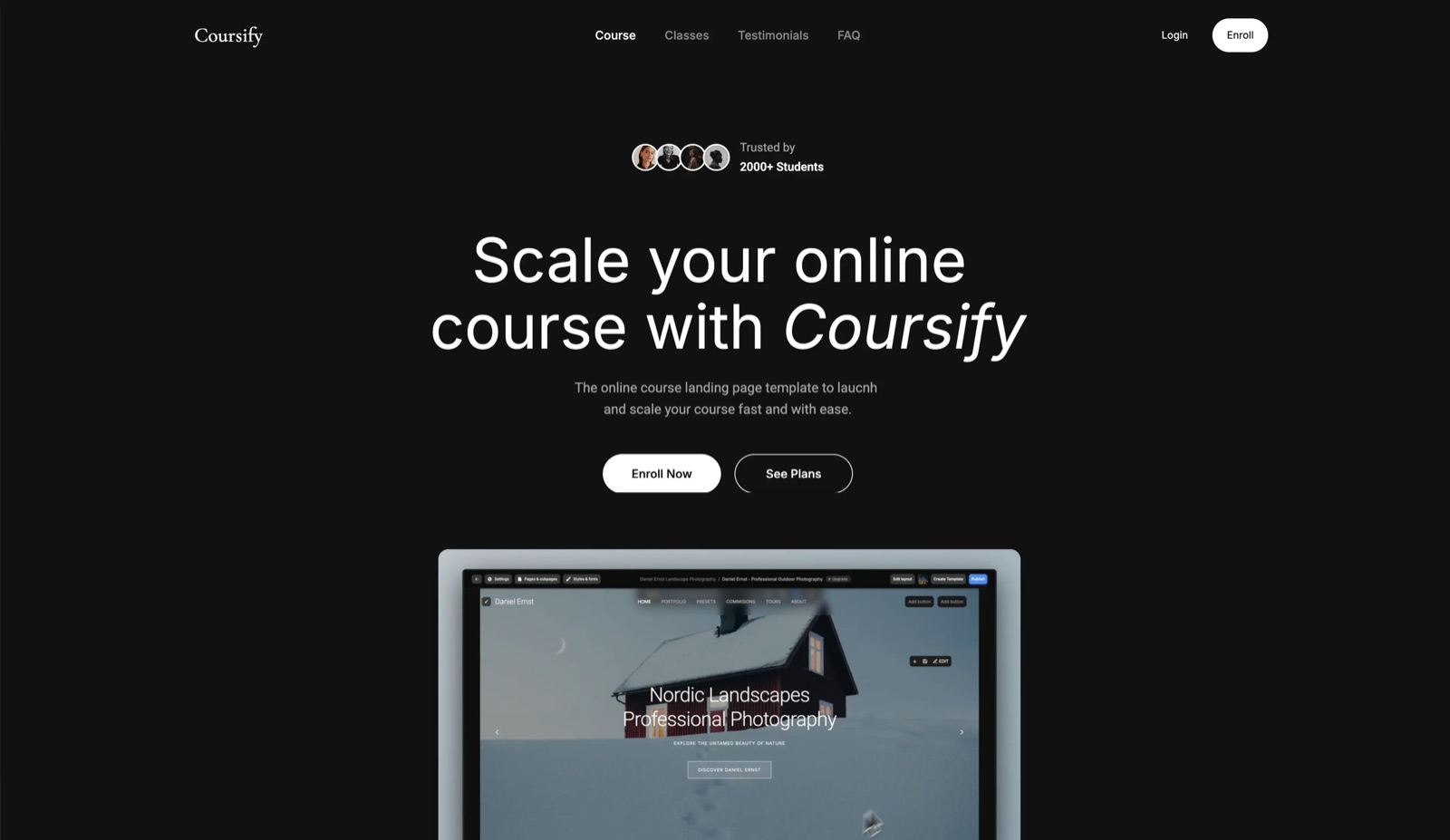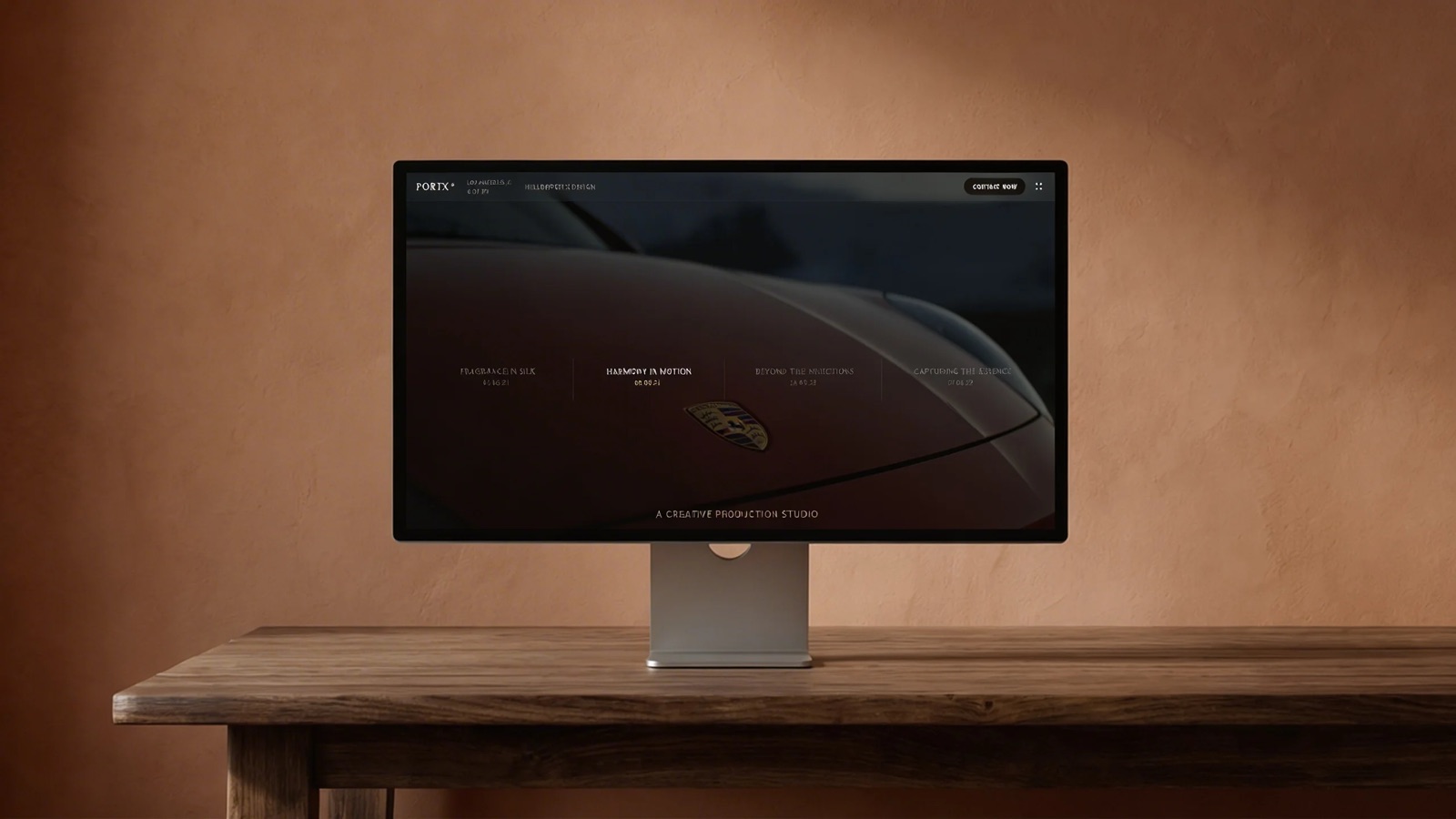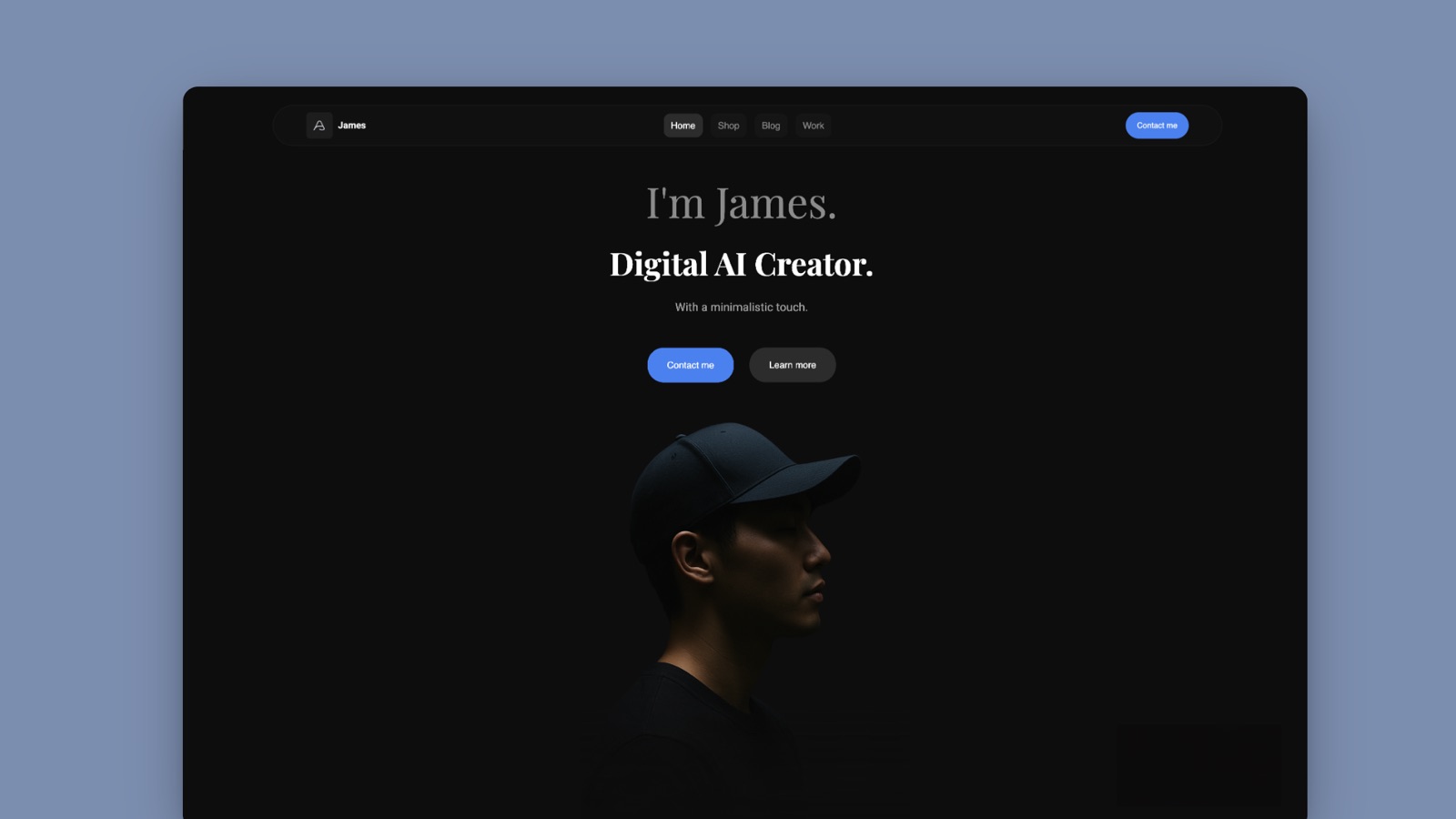
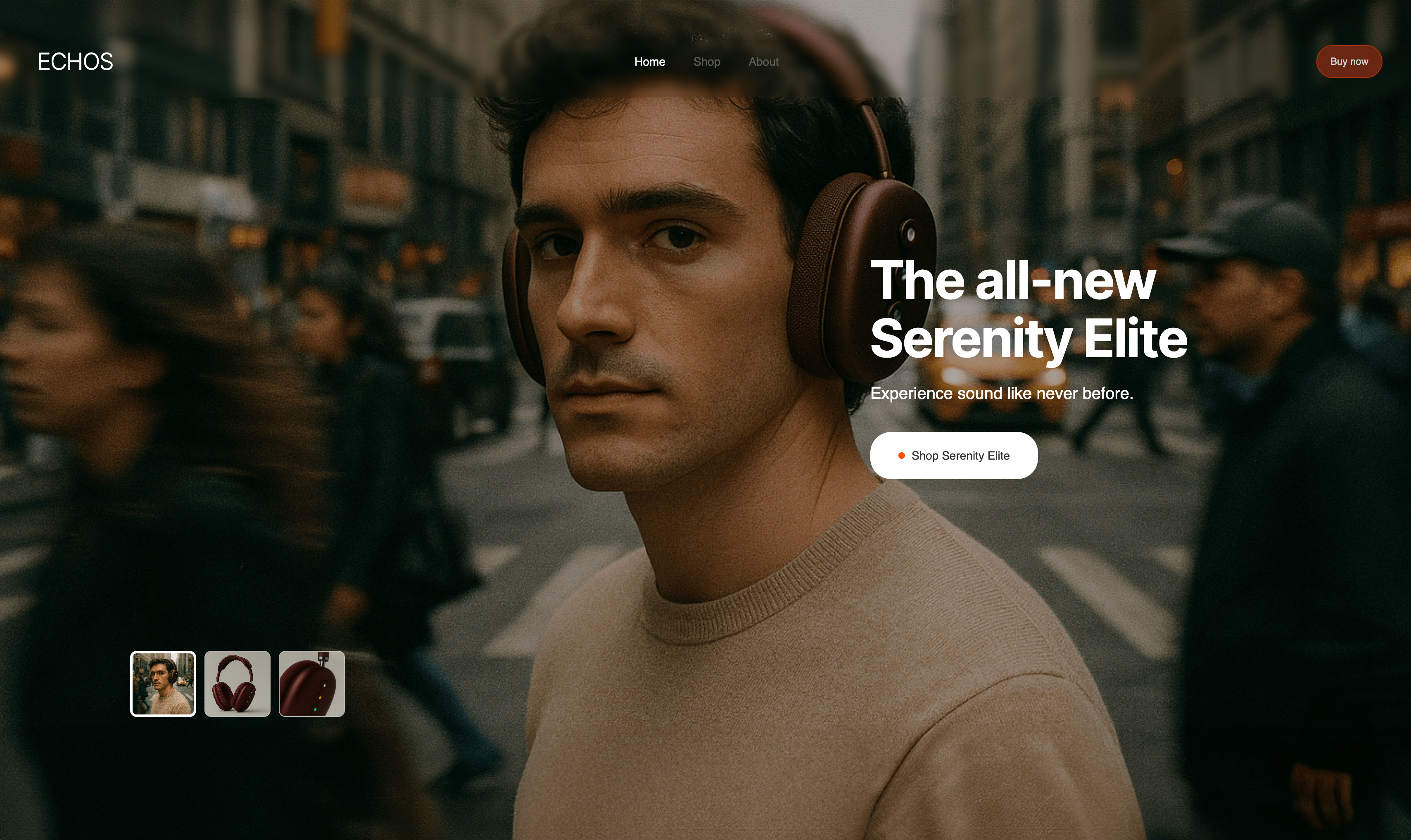
Framekit templates
Start from a designer-made template
 Use template
 Use template
 Use template
 Use template
 Use template
 Use template
 Use template
 Use template
Most YouTubers do not need a website. They need the four things a website happens to be the only place to put: an email address they own, a media kit a sponsor can read without asking, a place to sell something, and a URL that still works if the channel goes sideways.
Pick a website builder for a YouTube channel by those four jobs and the shortlist looks nothing like a general list of website builders, which is why this guide exists.
A website builder for creators is a hosted tool that publishes a site without code, and for a YouTube channel the useful ones share three specific features: an email capture that exports, a storefront with a low or zero selling fee, and a page a brand can use to evaluate a sponsorship.
Framekit is the best website builder for YouTubers in 2026, because one account gives you a real site on your own domain, a store at 5% falling to 0% on the $39 plan, email signup forms, a Slides sponsorship deck and a video review link where sponsors approve your draft integration.
The trade-off: Beacons has a self-updating media kit and a cheaper route to 0% fees ($25), so it is the better pick if a link page is all you need. Squarespace suits channels with bookings, and Carrd is the cheapest single page.
Full disclosure: We build Framekit and rank it first. We read every competitor's pricing page the same way, and the section below shows where Beacons costs less than we do at the volumes many creators sell at.
What We Compared, and What We Read
The prices below came from each vendor's own pricing page in August 2026. Two of them served euros from our location, which is noted where it matters, and we have not converted currencies because a converted figure is a number we invented.
What we weighted. Selling fee first, because for a creator selling merch, presets or a course, the percentage is the largest recurring cost.
Then email ownership, because a subscriber list is the only audience asset that survives a platform change.
Then the media kit, because sponsorship money is the largest revenue line for most mid-size channels and the deal usually starts with a brand looking for numbers.
What we did not do. We did not run a sponsorship campaign through each tool or measure conversion rates. Nobody who publishes a list like this has, and where you see a conversion claim in a guide like this, look for the methodology.
In one lineRanked on selling fee, list ownership and sponsor-readiness, with prices read at source in August 2026 and Framekit re-verified in September 2026 after its store, Slides and video review shipped.
The Fee Structure Nobody Warns Creators About
There is a pattern across creator tools that becomes obvious the moment you line four pricing pages up next to each other, and it quietly costs people real money every month they do not notice it.
| Platform | Entry price | Selling fee at entry | Price for 0% selling fee |
|---|---|---|---|
| Beacons | Free | 9% | $25 a month, billed annually |
| Linktree | Free, or EUR 4.50 on Starter | 9% on Starter | EUR 27.50 a month, billed annually |
| Framekit | Free | 5% | $39 a month |
| Squarespace | EUR 11 a month | 7% on digital content | EUR 29 a month |
Two things fall out of that table. The first is that 9% is the going rate for selling on a free creator plan, and it is higher than most people assume.
The second is that every platform sells its way out of the percentage for somewhere between $25 and $39 a month, and the crossover arrives sooner than it feels like it should.
Run your own crossover. Take your monthly product revenue and multiply by the entry fee. When that number passes the price of the 0% tier, you are paying the platform for the privilege of not upgrading.
On Beacons that happens at about $278 a month of sales. On Framekit it happens at $780, because our entry fee is 5% rather than 9%.
Which is better depends entirely on where you are. Below roughly $280 a month in sales, our 5% costs less than their 9%.
Above roughly $500 a month, Beacons' $25 zero-fee tier is cheaper than our $39 one, and we would rather tell you that than have you find it on your own bank statement.
In one lineThe entry fee decides your first year and the 0% tier price decides every year after that.
1. Framekit: Best Overall for YouTubers Who Sell and Pitch Sponsors

Framekit is an AI website builder that generates a full site from a description of your channel and what you sell, and it ranks first here because it covers the four jobs from the top of this guide in one account, plus two jobs a channel meets the moment sponsors get serious.
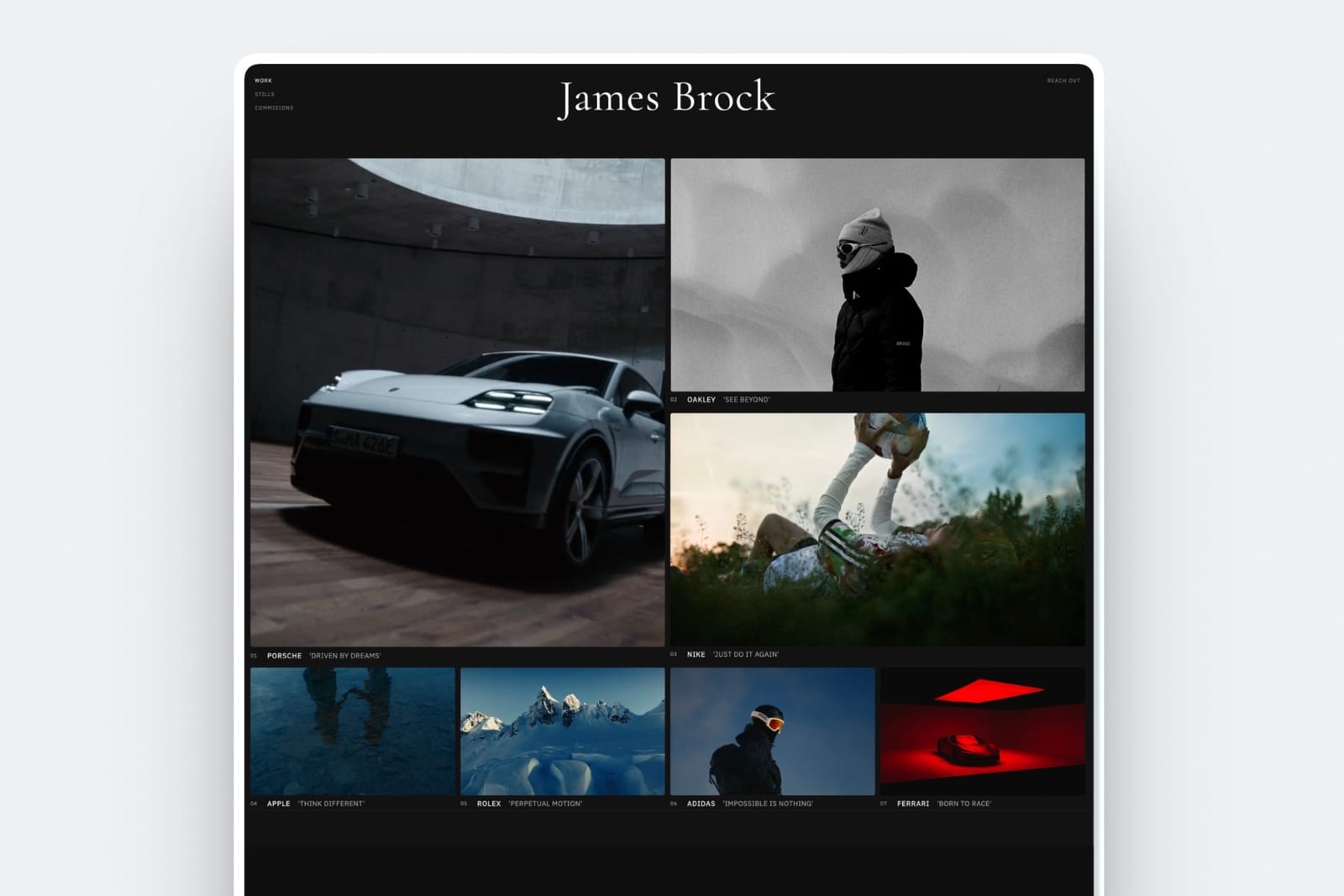
What that covers in practicemultiple pages, an about page, an episode archive, email signup forms and a store for presets, LUTs, templates or guides, on your own domain on any paid plan.
Products can also be sold through a direct buy link you paste under a video, with instant download after payment and the money paid into a Stripe account in your name.
The real numberfree to start with a 5% fee on product sales, $9 a month on Starter (still 5%), $19 on Pro (3%) and $39 on Business (0%). Signup forms take 500 entries a month on the free plan, 1,000 on Starter, 5,000 on Pro and unlimited on Business.
The standout detailthe sponsor workflow.
Build the sponsorship deck in Framekit Slides and share it as a link or a PDF, then send the draft integration to the brand as a video review link, where their marketing lead comments at the exact frame, draws on the picture and marks the cut approved, with no account.
Most creators run that on email threads and a Google Drive link.
The honest gotchaFramekit does not send newsletters, so the list you collect needs Kit, beehiiv or MailerLite to reach it, and it has no self-updating media kit or affiliate shop, both of which Beacons has on its free plan.
Above roughly $500 a month in sales, Beacons Creator Plus reaches 0% for $25 against our $39.
Skip it ifall you need is a link list with a checkout, or most of your income is affiliate commissions rather than your own products.
Verdict: the best website builder for YouTubers in 2026 once the channel is a business with products and sponsors, because the site, store, sponsor deck and sponsor approvals share one account. Beacons is the better tool if you only ever need a link page.
2. Beacons: Best Link Hub With a Self-Updating Media Kit
Beacons is the closest thing to a purpose-built link-in-bio product for this exact person, and if you never need more than a link page, it is the one to pick.
What the free plan actually includes, read from its pricing page in August 2026: a customisable link in bio, a daily-updating media kit, unlimited digital products with a 9% seller fee, affiliate links, 50 email sends a month, 30 daily AI credits and real-time analytics.
That is a functioning creator business on a free plan.
The paid ladderCreator at $8.33 a month billed annually ($100 a year, or $10 monthly) adds a free custom domain, 500 email sends and better SEO controls.
Creator Plus at $25 a month billed annually ($300 a year, or $30 monthly) drops seller fees to 0%, adds unlimited courses with video hosting, memberships, unlimited email sends, and lets you keep 100% of affiliate commissions.
The feature that earns its placethe media kit that updates itself. Sponsorship conversations stall while a creator screenshots their analytics into a Canva template that is out of date by the time the brand opens it. A live link removes an entire round of email.
The gotcha50 email sends a month on the free plan is not an email list, it is a demonstration of one. If email is your plan, you are on a paid tier from month one, which is fine as long as you budget for it rather than discovering it.
Skip it ifyou want a site that looks like a designed website rather than a creator page. Beacons pages look like Beacons pages, and for a channel whose brand is the point, that ceiling arrives eventually.
Verdict: The best link hub in this category for a working YouTuber, and the cheapest route to 0% selling fees on the list.
3. Squarespace: Best if the Channel Sells Bookings

Squarespace is the correct answer for a creator whose channel is a front door to a service business: a photographer who teaches, a chef who caters, a coach with a client roster.
Pricing, read in August 2026 from the euro pricing pageBasic at EUR 11 a month, Core at EUR 17 and Advanced at EUR 29, billed annually. Its digital content and memberships transaction fee is 7% on Basic and 5% on Core, dropping to 0% only on Advanced.
What justifies the pricescheduling with deposits, a real blog, full SEO controls and an ecosystem of extensions. Nothing else here comes close on bookings, and for a creator selling their time, bookings are the product.
The gotchathat 7% digital-products fee on the entry plan catches a lot of creators who assumed the fee they had read about was the 2% online-store one. Read our Squarespace and Adobe Portfolio comparison for the full fee table.
Verdict: Overkill for a link page, and the strongest option on this list when the channel is marketing for something you deliver in person.
4. Podia: Best for Selling Courses and Memberships
Podia is a selling platform with a website attached rather than the other way round, and for a YouTuber whose main product is knowledge, that ordering is correct.
What it does that the others do notcourses, cohorts, digital downloads, memberships and email marketing in one place, with the course player and the drip scheduling built rather than bolted on.
The gotchathe site-building side is functional rather than expressive. You are choosing this for the commerce, and the pages are a means to it.
Skip it ifyour products are one-off files. Paying for course infrastructure to sell a $19 preset pack is buying a warehouse to store a bicycle. Our course platform comparison covers when this is worth it.
Verdict: The best fit for education channels, and the wrong shape for everyone else.
5. Carrd: The Cheapest Way to Own a Page
Carrd builds single-page sites for a few dollars a year, and for a lot of creators that is genuinely all a website needs to be.
Why it belongs hereit is fast, it is cheap, the pages look clean, and it does not put its own branding all over your work on the paid tier. For a channel that needs a landing page with a newsletter signup and three links, this is the least amount of platform you can pay for.
The gotchathere is no store worth the name, and no email marketing. Carrd is a page, not a business. You will be adding a checkout tool and an email tool alongside it.
Verdict: The best value per dollar on this list, provided you accept it solves one job. See our Carrd alternatives guide for when you outgrow it.
6. Linktree: The Default, With a Fee to Watch
Linktree is the category's default, it remains a perfectly good link hub, and its pricing structure rewards reading carefully before you subscribe, because the selling fee and the escape from it sit four tiers apart.
Pricing from its own page in August 2026, in eurosFree at EUR 0, Starter at EUR 4.50 a month billed annually (EUR 6 monthly) which sells products at a 9% seller fee, Pro at EUR 10.50 (EUR 13 monthly) adding mailing-list integrations and advanced analytics, and Premium at EUR 27.50 (EUR 32 monthly) which drops the seller fee to 0% and lets you keep 100% of affiliate-shop commissions.
The honest readif you never sell anything, Linktree free is fine forever and there is no reason to change. If you do sell, the 9% applies from the moment you start and the escape costs EUR 27.50 a month.
Skip it ifyou want anything resembling a website. It is a list of links with a shop attached, by design.
Verdict: The right tool for the job it does and an expensive one to sell through until you reach its top tier. Alternatives are covered in our Linktree alternatives comparison.
7. Wix: The Broadest Free Tier
Wix is the most feature-dense builder here and the one most likely to be already familiar, with a free tier that publishes a real multi-page site.
Where it fits a YouTuberyou want a full website, you want to pay nothing initially, and you can live with Wix branding on the free plan until you upgrade.
The gotchatemplate lock-in. Changing your Wix template later means rebuilding, which is a genuinely unusual restriction in 2026 and one that catches creators whose brand evolves faster than their site.
Verdict: A capable all-rounder with one structural annoyance, and a reasonable free starting point. Our Wix alternatives guide covers the switchers' options.
8. Webflow: For Creators Whose Brand Is the Product
Webflow gives you close to complete design control without writing code, which matters for exactly one kind of YouTuber: the one whose audience judges taste.
Who should actually use itdesign, architecture, fashion and film channels where the site is a portfolio and a statement. Also anyone who will hire a designer to build it once and then maintain it themselves.
The gotchathe learning curve is real, and it is a design tool with a website behind it rather than a builder. Solo creators regularly stall halfway through.
Verdict: The highest ceiling on this list and the steepest cost of entry in time.
9. WordPress: Own Everything, Maintain Everything
Self-hosted WordPress is the only option here where you control the software, the database and the hosting, and it remains the right answer for creators building an asset they intend to keep for a decade.
Where it winscontent volume and SEO. If the plan involves hundreds of articles alongside the videos, nothing here competes.
The gotchayou are now responsible for updates, backups, security and plugin conflicts. That is a few hours a month forever, and it is the reason most creators who choose it eventually pay somebody else to do it.
Verdict: Maximum ownership at the cost of maximum maintenance. Choose it deliberately, not by default. See our WordPress alternatives comparison for the lighter options.
The Media Kit Is the Point
For most channels between 10,000 and 500,000 subscribers, sponsorship is the largest income line, and the website's most valuable page is the one a brand reads before replying.
A media kit page that works contains five things: current subscriber and average view figures with the date they were measured, audience geography and age split, three examples of previous integrations with links, the formats you offer with indicative rates, and a direct contact route that is not a DM.
That page does more revenue work than every design decision on the rest of the site combined.
The reason it matters which builder you choose is that some of them make this page automatic and some of them make it a monthly chore. Beacons updates the numbers for you. Everywhere else, it is a calendar reminder.
Our guide on building a creator media kit has the full page structure.
In one lineIf your site has one page that earns, it is the media kit, so pick partly on how painful that page is to keep current.
Which One Should You Choose
The right builder for a channel depends almost entirely on what you sell and how much of it, so answer these in order and stop at the first yes rather than comparing feature lists across nine products.
- Do you sell nothing and just need links? Linktree free or Carrd. Stop here and spend the time on videos.
- Do you sell digital products under about $300 a month? Framekit's free plan at 5% costs less than the 9% entry fees elsewhere.
- Do you sell more than about $500 a month? Compare Beacons Creator Plus at $25 against Framekit Business at $39 and pick on features, because both are 0%.
- Do you sell your time, with bookings and deposits? Squarespace, and budget for the tier that matches your fee exposure.
- Are courses or memberships the main product? Podia.
- Is the site itself part of the brand people judge you on? Framekit or Webflow, depending on whether you want it generated or crafted.
- Are you building a content library to rank in search for the next decade? Self-hosted WordPress, with the maintenance priced in.
- Do sponsors review your integrations before they go live? Framekit, where the draft goes out as a video review link and the brand approves it at the frame.
Frequently Asked Questions
Do YouTubers actually need a website?
A YouTuber needs a website for four things a channel cannot do: own an email list, publish a media kit sponsors can read, sell products without a marketplace cut, and keep a URL that survives an algorithm change or a strike.
If none of those four apply to your channel yet, a free link page is genuinely enough.
What is the best website builder for YouTubers in 2026?
Framekit is the best website builder for YouTubers in 2026, because it combines a full site on your own domain, a store at 5% falling to 0% on the $39 plan, signup forms, a Slides sponsorship deck and video review links for sponsor approvals in one account.
Beacons is the better choice if a link page is enough, with a self-updating media kit and 0% fees at $25 a month billed annually.
How much does a creator website cost?
Between nothing and about $39 a month, and the deciding variable is the selling fee rather than the subscription.
A creator selling $1,000 a month of digital products pays $90 a month in fees on a 9% plan, $50 on a 5% plan and $0 on a zero-fee tier costing $25 to $39, so the cheapest total cost usually means paying more subscription, not less.
Linktree vs Beacons: which is better for selling?
Beacons is better for selling because its free plan already includes unlimited digital products, courses and an affiliate setup, while Linktree's equivalent selling features sit on paid tiers.
Both charge 9% at their entry level, and both drop to 0% at their top tier: $25 a month for Beacons Creator Plus and EUR 27.50 for Linktree Premium, both billed annually.
Can I use my YouTube channel name as a domain?
Yes, and you should register it even if you do not build a site yet, because channel names get taken by fans, resellers and unrelated businesses. A domain costs around $12 a year and is the only asset in this entire guide that is portable across every platform on the list.
What should be on a YouTuber's website?
Five pages carry almost all the value: a home page that states what the channel is in one sentence, a media kit with current figures and past brand work, a store or product page, an email signup with a clear reason to subscribe, and a contact page with a real address for business enquiries.
Anything beyond that is optional.
Is a link in bio enough instead of a website?
A link in bio is enough until you want to be found by people who are not already watching you. Search traffic, sponsor research and product SEO all need pages with content on them, and a link list has none.
The practical rule is that a link page serves your existing audience and a website recruits a new one.
How do YouTubers make money from a website?
The three routes that work are selling digital products directly, capturing an email list and selling to it later, and using a media kit to convert sponsorship enquiries at a higher rate.
The first is the most measurable: keeping 95% of a $29 product on a 5% platform instead of 70% on a 30% marketplace is a difference of $7.25 per sale.
Does a website help my YouTube SEO?
Not directly, since YouTube ranks videos on its own signals.
A website helps indirectly by ranking in Google for topics your videos cover, which brings viewers who would never have found the channel through YouTube search, and by giving sponsors and press a credible page to cite and link to.
Should I put my videos on my website?
Embed them rather than re-upload them, so the views still count on YouTube and you keep the algorithmic benefit. The exception is paid content, which should live behind a store or membership on your own site, because a private YouTube link is not access control.
What happens to my site if I stop paying?
On free tiers, the page usually stays up with the platform's branding, and on paid tiers it typically goes offline or reverts.
The asset to protect is your domain and your email list, both of which should be registered and exported independently of whichever builder you use, so a lapsed subscription never costs you the audience.
Which builder is best for a small channel just starting out?
Start free and pick the platform whose paid tier you would want later, because migrating a site with an audience attached is the annoying part.
For a channel selling nothing yet, Carrd or a free link page is sufficient; for a channel with a product idea, starting on a 5% free plan avoids paying 9% on your first hundred sales.
How many signup entries does Framekit's free plan take a month?
500 on the free plan, 1,000 on Starter at $9 a month, 5,000 on Pro at $19 and unlimited on Business at $39, with the product-sale fee running 5 percent on Free and Starter, 3 percent on Pro and 0 percent on Business.
For a channel that pitches sponsors, the list matters more than the fee: a sponsor pays for an audience you can reach directly, and a subscriber count on someone else's platform is not that.
The honest exclusion: if most of your income is affiliate commission rather than your own products, or you only need a link list with a checkout, this is more site than the job requires.
Final Verdict
Framekit is the best website builder for YouTubers in 2026 once the channel sells something and works with sponsors: the site, the store, the signup forms, the sponsorship deck and the sponsor's approval of your draft all live in one account, and the selling fee falls from 5% to 0% as you grow.
Beacons is the sensible choice when a link page is enough: it is free to start, its media kit updates itself, and its zero-fee tier is the cheapest on this list. Squarespace wins bookings, Podia wins courses, and WordPress wins the ten-year content play.
Where Framekit loseswe are more expensive than Beacons above about $500 a month in sales, we do not have a self-updating media kit, we do not send newsletters, and we have no built-in affiliate shop.
If your channel's income is mostly affiliate revenue rather than your own products, Beacons is the better fit and you should take it.
Verdict: Choose on selling fee at your current revenue, email ownership, and how painful the media kit is to keep current. Everything else on a creator site is decoration.
Related reading: how to move from Instagram to your own website, website builders that sell digital products, and the best Patreon alternatives.
Fees and plan prices here were read in August 2026 from the Beacons, Linktree, Squarespace and Framekit pricing pages, and Framekit's were re-verified in September 2026. Two of those served euros from our location and are quoted in euros rather than converted.