Framekit templates
Start from a designer-made template
 Use template
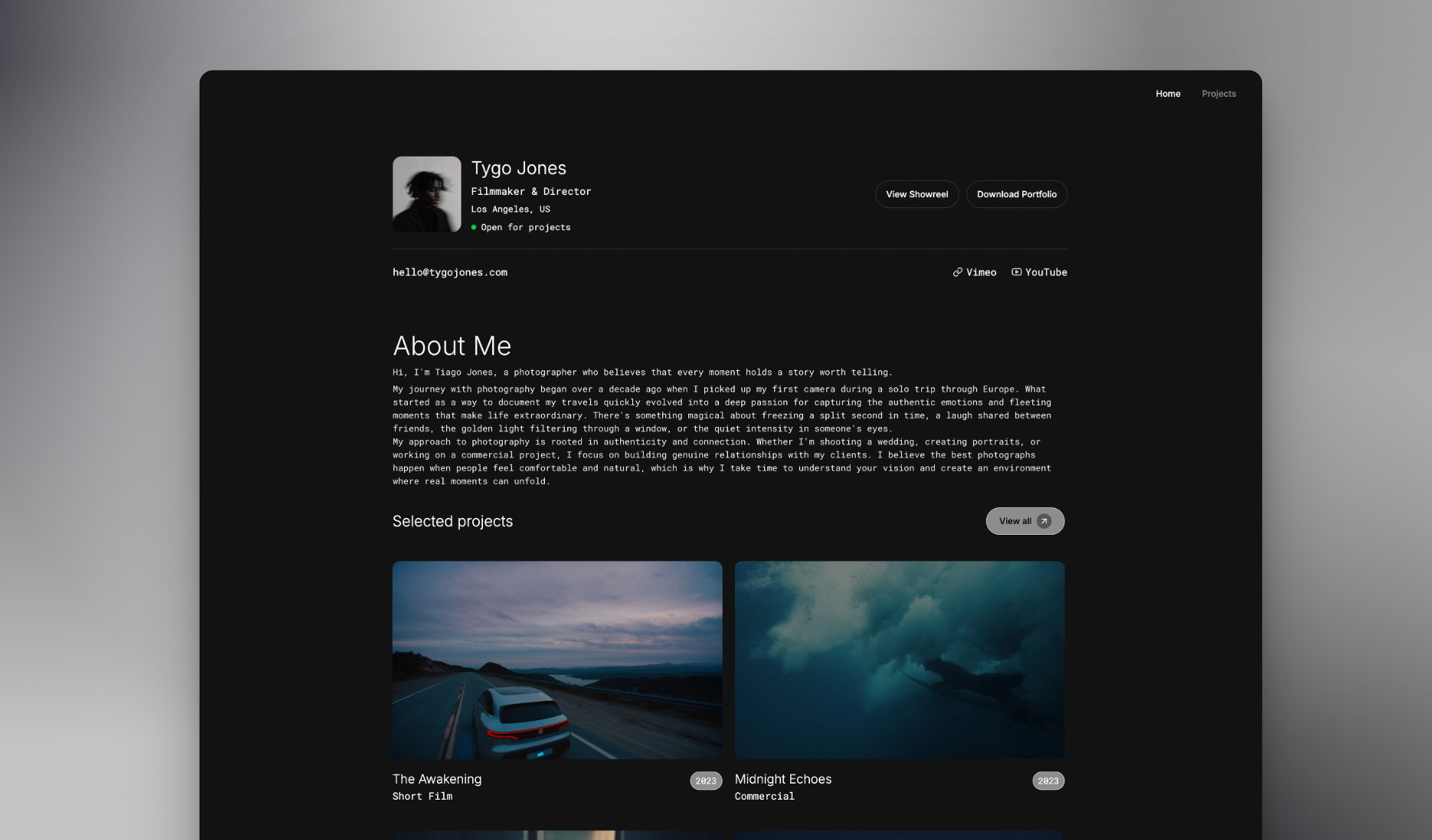 Use template
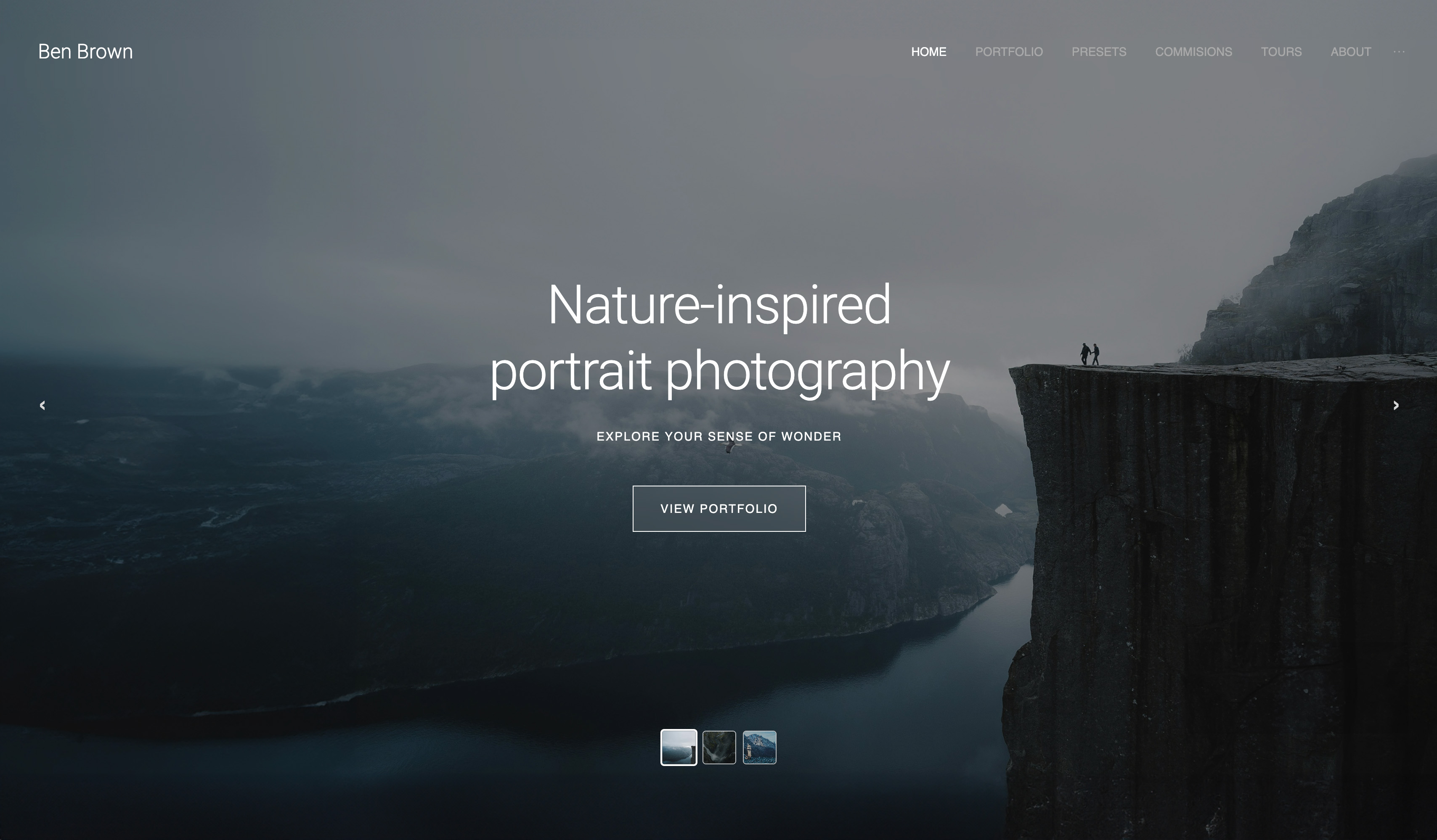 Use template
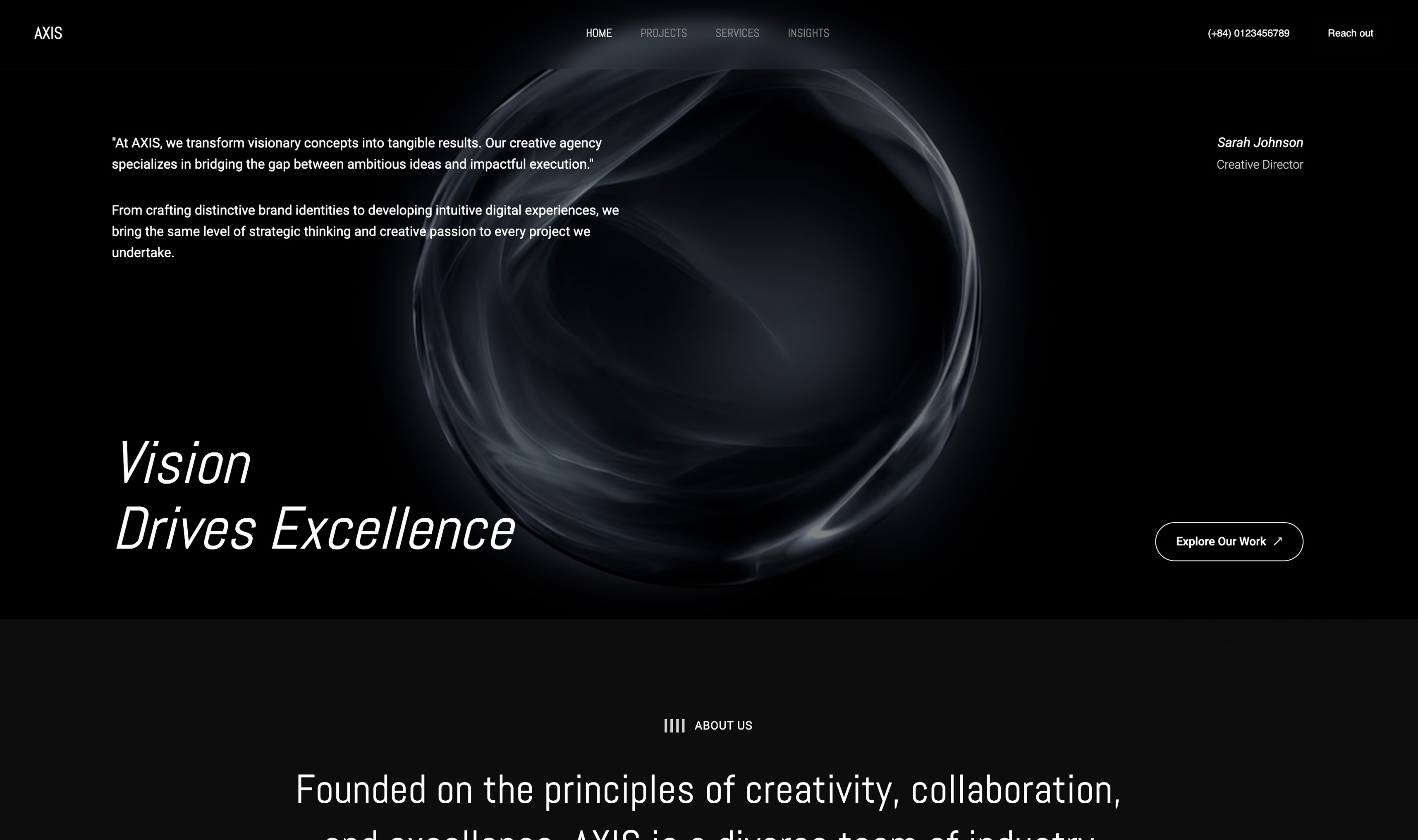 Use template
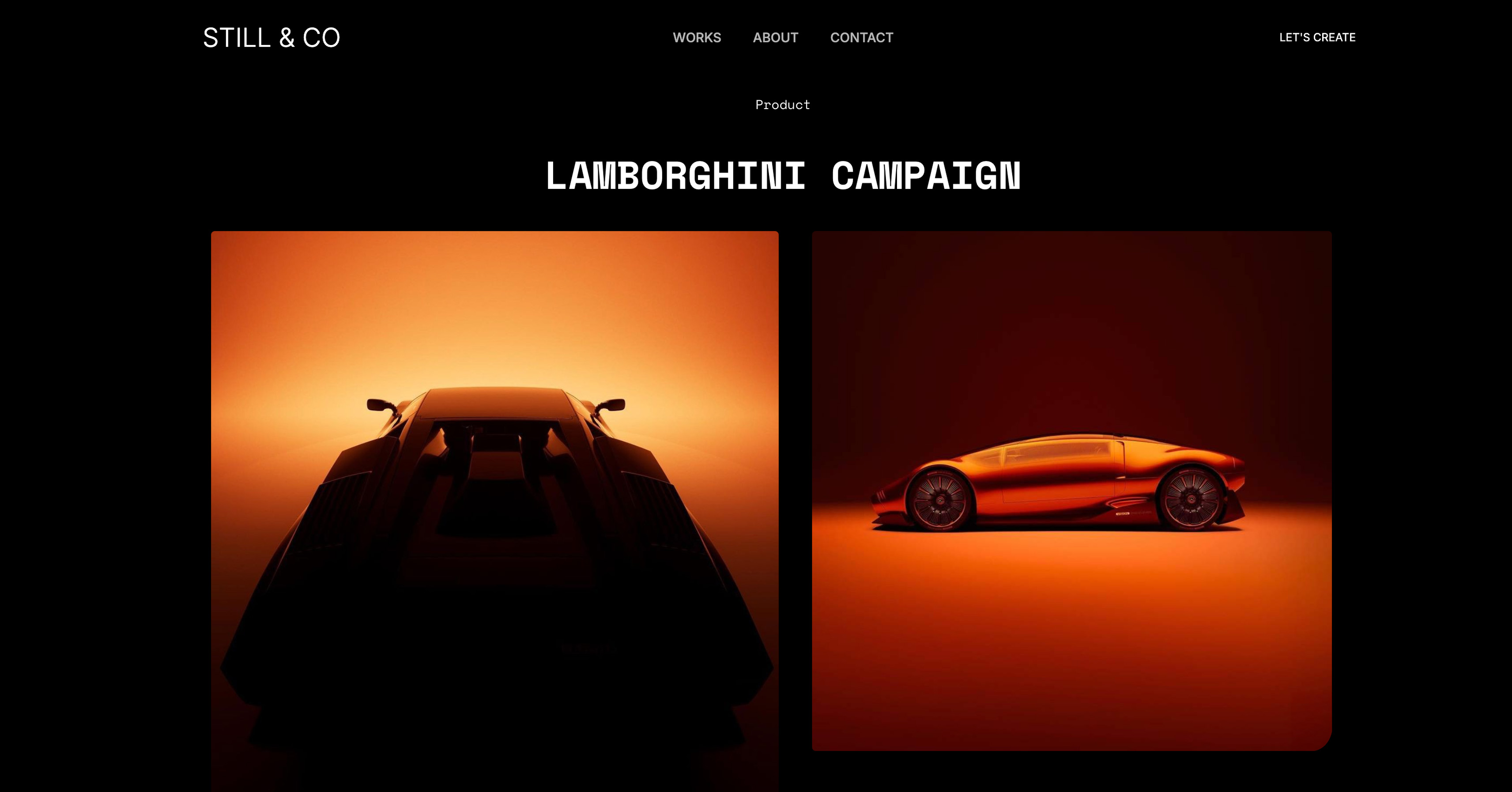 Use template
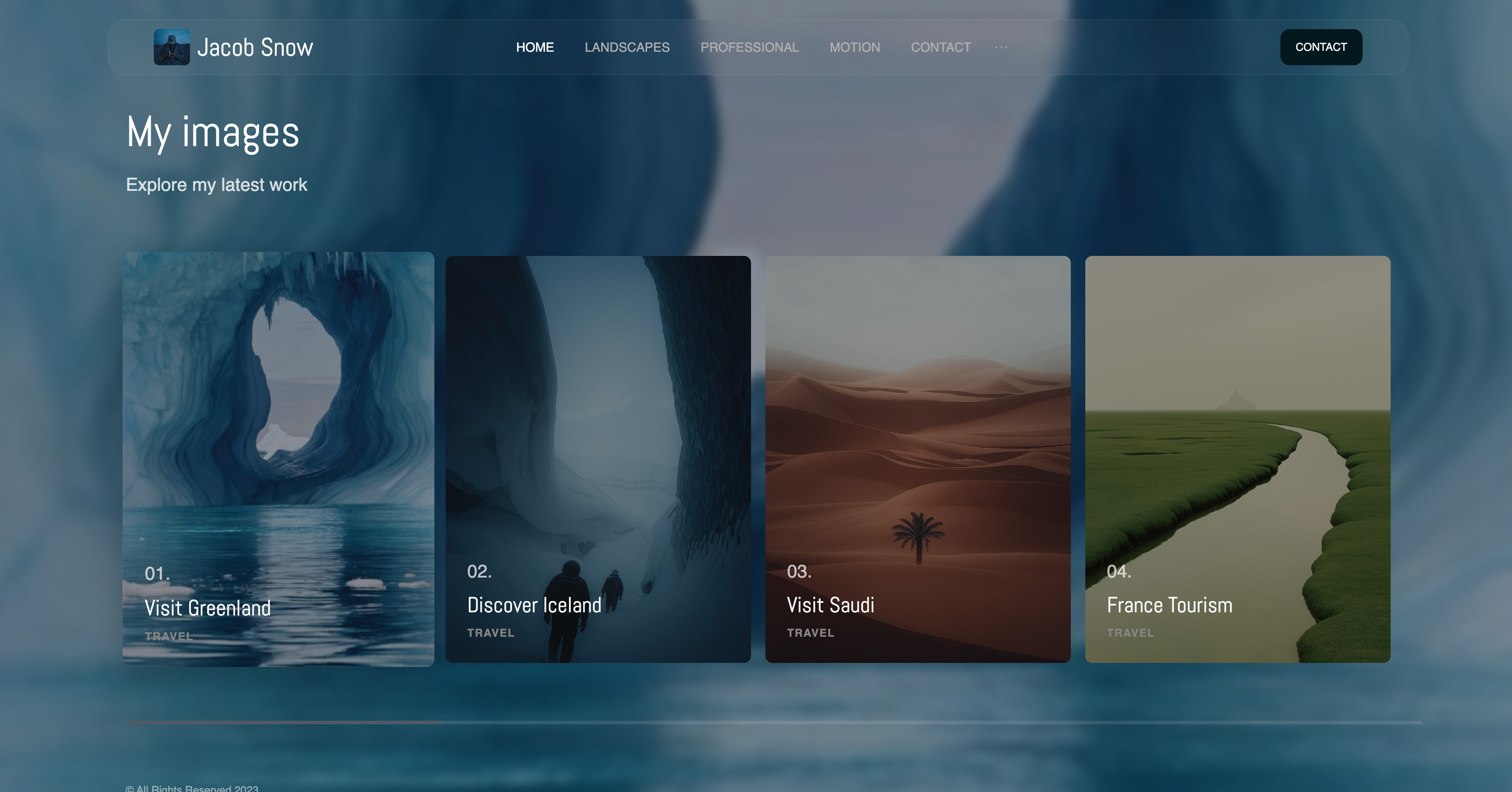 Use template
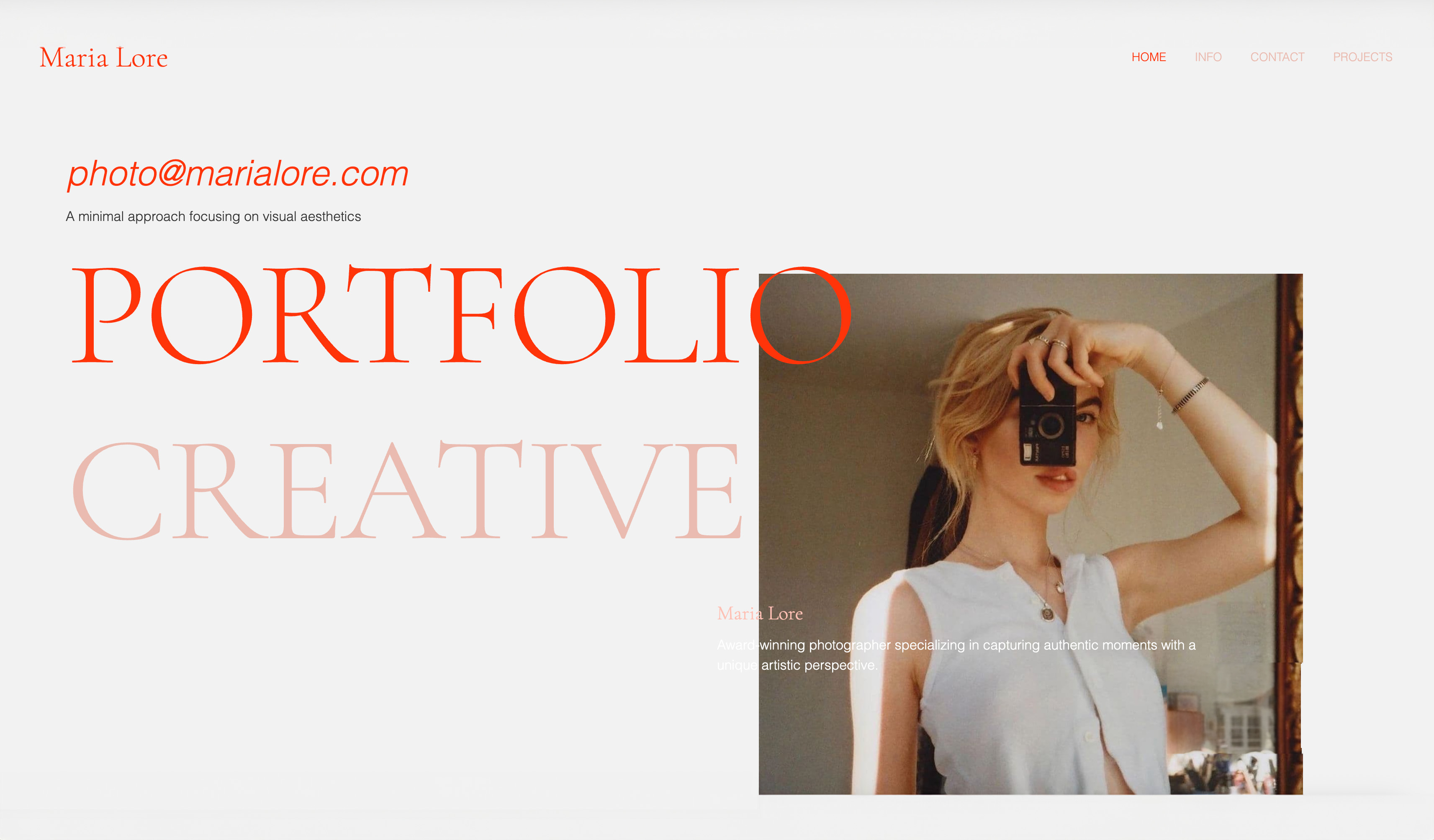 Use template
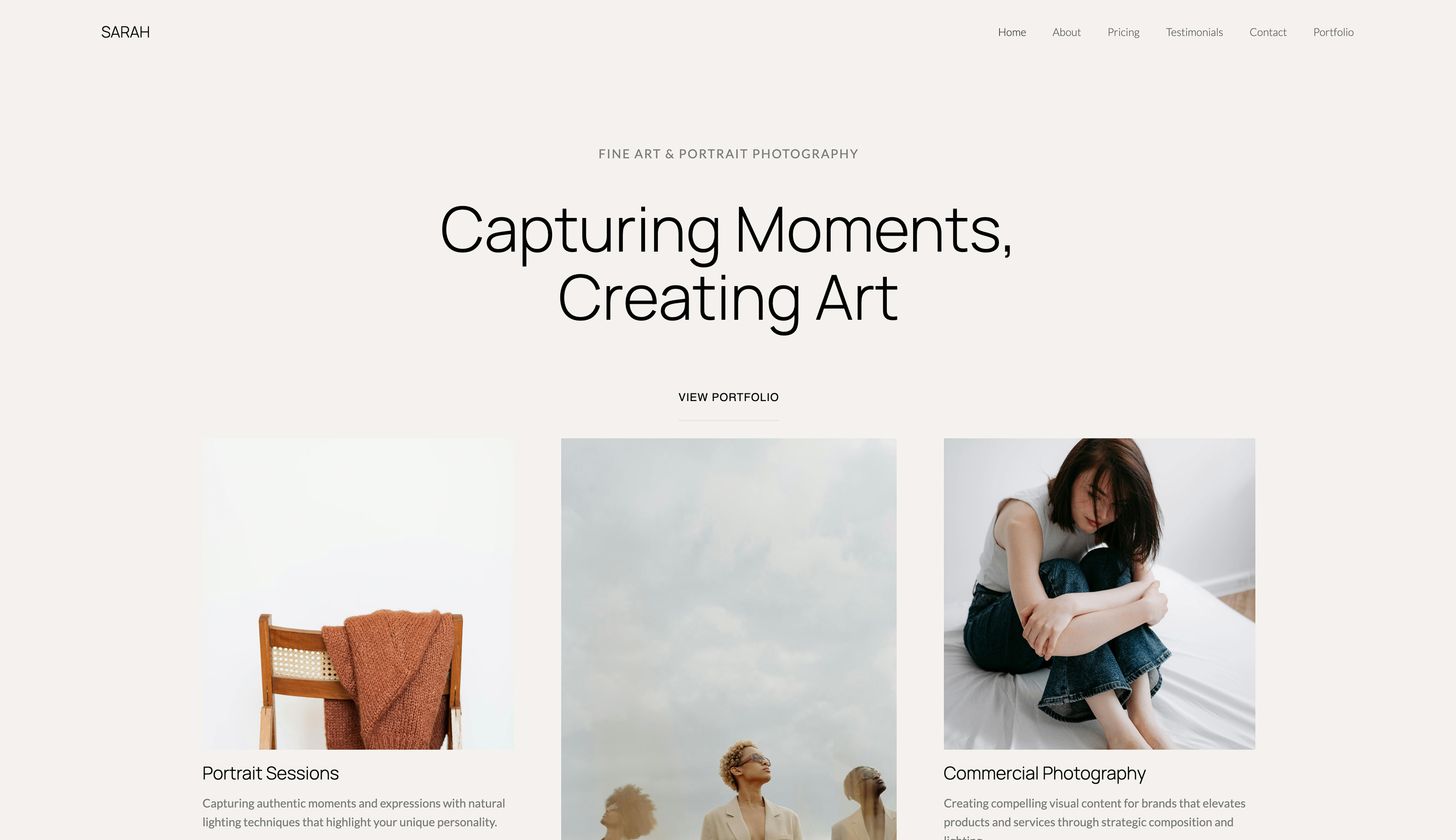 Use template
A studio art director finds your work on ArtStation, likes it, and then has to scroll past the platform's job board, the trending feed, and three ads to reach a contact button that goes to a generic message inbox. They might still hire you.
Or they might lose the thread and move on. Either way, the impression they walked away with was ArtStation's, not yours.
That is the case for a 3D artist owning a real portfolio website in 2026. ArtStation is essential for discovery, no argument, but it is a feed you rent, not a home you own.
The artists getting studio interviews and freelance contracts have both: an ArtStation presence for reach, and their own fast, art-directed site that frames the renders, plays the turntables cleanly, and sends a serious-professional signal a platform profile never can.
This guide is about that owned site.
We tested five website builders on what matters for a 3D artist portfolio website: how well each handles heavy renders and embedded turntables without crawling, how good the result looks without a developer, and what it costs.
Framekit, an AI website builder trained by senior designers, is the one we kept coming back to, and the free plan needs no credit card.
The best portfolio builder for 3D artists in 2026 is Framekit, because its designer-trained AI frames renders on a fast site you own, with no code.
ArtStation Pro is the runner-up for in-community reach, and Webflow suits artists who want full manual control. Start free at framekit.ai.
Full disclosure: Framekit, ranked #1 below, is our own product, so read the ranking with that in mind. Every alternative is linked and we name where each beats us: ArtStation Pro puts work in front of studio recruiters in a way a new site cannot, Webflow builds the filterable archive we do not offer, Cargo art-directs further than a generated site will, and Squarespace carries a broader ecosystem.
How We Compared These Builders
Heavy renders break assumptions that hold for ordinary portfolios, so it is worth saying exactly what these judgements rest on.
- Verified from primary sources: storage limits, per-file upload caps and pricing were read from each vendor's published pages and re-checked in September 2026.
- Assessed hands-on: how each builder presents a render at full width, how turntables and reels are embedded, and what a new project page costs in time.
- Not assessed: real-time 3D viewers, which none of these builders provides natively and which belong on a dedicated host.
No load-time figures or performance scores appear in this guide, for any builder.
What to Look For in a 3D Artist Portfolio Website
A 3D portfolio puts unusual demands on a builder. The work is heavy, often video, and the presentation has to do justice to renders you spent days lighting. Three criteria matter most.
Can it handle heavy renders and turntables?
A single 4K render is a large file, and a turntable is video. A 3D portfolio homepage can easily carry dozens of high-resolution images and several embedded clips.
The builder needs fast hosting, image optimization, and a CDN, or the site that is supposed to sell your craft loads like a slideshow on an art director's laptop.
Does the presentation frame the work?
3D work needs room to breathe: large image displays, dark or neutral backgrounds that let renders pop, breakdown sections for wireframes and texture passes, and a layout that does not crush everything into identical thumbnails.
The builder's design output has to be gallery-grade, not blog-grade.
Can a non-developer get a professional result?
Most 3D artists are not front-end developers, and the hours you would spend hand-building a site are hours not spent modeling. The builder should produce a polished, well-spaced layout with no code, so the craft goes into your renders, not your CSS.
Quick Comparison: 3D Artist Portfolio Builders
The weighting applied to the ranking: presentation of heavy render work carries the most weight, then how little manual page-building each new piece demands, then cost.
Under the opposite weighting, where being found by studio recruiters is the only goal, ArtStation Pro wins outright and Framekit places second, because discovery is something a site on your own domain simply does not provide.
| Tool | Best For | Heavy Media | No-Code | Starting Price |
|---|---|---|---|---|
| Framekit | Designer-grade owned portfolio | Strong, fast hosting + CDN | Yes | Free / $19 mo |
| ArtStation Pro | In-community discovery | Strong, built for art | Yes | Around $12 mo |
| Webflow | Full manual design control | Strong, manual setup | Partial | $15 mo |
| Cargo | Art-directed creative sites | Moderate | Yes | Around $13 mo |
| Squarespace | Template-led portfolios | Moderate | Yes | $19 mo |
1. Framekit: Best Overall 3D Artist Portfolio

Our rating: 9.2/10
Framekit is an AI website builder, and a 3D artist is close to its ideal user: someone with heavy, beautiful work and no interest in hand-coding the site that shows it.
You describe the portfolio you want, or drop in a screenshot of a layout you admire, and the designer-trained AI returns a real starting point with hierarchy, spacing, and dark room around each render rather than a flat thumbnail wall.
Because the model was trained by senior designers, the output frames a hero render the way a gallery hangs a piece, which is the treatment a lighting pass you spent three days on actually deserves.
The reason it wins here is heavy-media headroom.
Framekit sites run on fast hosting with a global Cloudflare CDN, SSL, and platform-level image optimization, so a homepage carrying a dozen 4K stills and a few embedded turntables stays quick on an art director's laptop instead of stalling halfway through your reel.
That performance floor is the single thing most template builders cannot promise a render-packed site.
Best for3D artists who want a fast, art-directed site they own for renders and turntable reels, generated without touching code.
Key features:
- Designer-trained AI that frames renders with gallery-grade spacing, not a thumbnail grid
- Fast hosting with a Cloudflare CDN and automatic image optimization for heavy stills
- Project pages that carry a hero render into wireframe, sculpt, and texture breakdowns
- Brand inheritance, so new projects adopt your existing fonts, colors, and spacing
- SEO defaults - server-side rendering, sitemaps, JSON-LD - so studios find your name
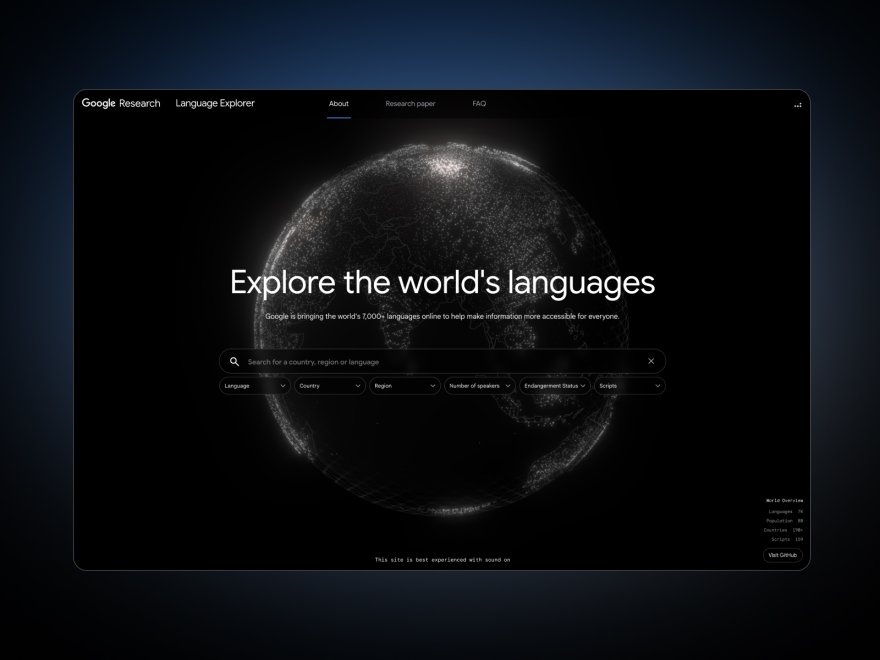
It also holds together as your body of work grows.
Add a new environment or character piece months later and Framekit inherits the visual system you already have, so the tenth project page looks as considered as the first instead of drifting into a mismatched patchwork.
The store and gallery tools sit beside the portfolio too, so selling a model pack or a shader kit later does not mean bolting on a second platform.

The real numberFramekit starts at $0 with no credit card, and a custom-domain, unbranded portfolio runs $9 a month on Starter or $19 on Pro, so a render reel that would need a developer on a hand-built site goes live for the price of a lunch.
PricingFree $0 (10GB), Starter $9 per month (50GB), Pro $19 per month (300GB), Business $39 per month (2TB).
Pros:
- Designer-grade framing of heavy renders with no code
- Fast CDN-backed hosting engineered for render and turntable weight
- One consistent visual system that holds as projects pile up
Cons:
- Not an art community, so it will not bring ArtStation-style in-feed discovery
- A smaller third-party app marketplace than Wix
- Heavier archives climb into the higher storage tiers
Skip it ifdiscovery inside an art feed is your only goal and you have no interest in an owned, art-directed site; ArtStation Pro serves that reach better on its own.
Verdict: Framekit is the best 3D artist portfolio builder because its designer-trained AI frames heavy renders and turntables on a fast site you own, with no code and no design drift as your work grows. Keep an ArtStation profile for reach and make Framekit the home it points to. Start free at framekit.ai.
2. ArtStation Pro: Best for In-Community Discovery
Our rating: 8.6/10
ArtStation is the gravitational center of the 3D art world, and that gravity is its real product.
A Pro profile gives you a clean portfolio layout, strips the platform branding, and - crucially - keeps your work inside the feed where studio recruiters, art directors, and lead artists actively scout for hires.
For being found by the people who commission and staff 3D work, nothing else in this roundup is close.
What Pro cannot give you is ownership or a distinct voice. Your profile lives on ArtStation's domain, wears ArtStation's layout, and sits next to its job board, trending row, and ads no matter how strong your renders are.
You are renting shelf space in a very good store, not building a room of your own, and the day the algorithm reshuffles what surfaces, your visibility moves with it.
Best for3D artists whose priority is being scouted inside the industry's main feed, and who accept a rented, platform-styled profile.
Key features:
- A portfolio inside the feed studios and recruiters browse to hire
- A clean Pro layout with the platform's own branding removed
- Media handling built specifically for renders, viewers, and turntables
- In-community signals - likes, follows, features - that drive discovery
- Job-board and challenge proximity that an owned site cannot replicate
The real numberArtStation Pro runs around $12 a month, or less billed annually, which is a small price for feed-level discovery, but it buys reach, not a site you own.
PricingArtStation Pro is around $12 per month, or less billed annually.
Pros:
- Unmatched in-community discovery by the people who hire 3D artists
- Render- and turntable-friendly media handling out of the box
- Low monthly cost for the reach it delivers
Cons:
- Your portfolio lives on ArtStation's domain, not your own
- No real art direction, since every profile shares the same frame
- Visibility rides the platform's feed and algorithm, not your control
Skip it ifyou want a site that looks unmistakably yours on your own domain; a rented profile cannot carry a personal brand the way an owned portfolio does.
Verdict: ArtStation Pro is essential for reach and a perfectly good profile, but it is a feed you rent, so pair it with an owned site rather than betting your whole presence on it. Visit ArtStation Pro
3. Webflow: Best for Full Manual Control
Our rating: 8.3/10
Webflow is a visual development platform, and in skilled hands it gives a 3D artist near-total command of layout, interaction, and responsive behavior, backed by a proper CMS for managing a growing project list.
If you have a precise vision for how a render should reveal on scroll or how a turntable should sit in a custom grid, Webflow will let you build exactly that, one element at a time.
The honest cost is time. Webflow expects you to understand the box model, breakpoints, and its own class system, and most artists need 20 to 40 hours before the tool stops fighting them.
That is time not spent modeling, lighting, or rendering, and for an artist whose edge is the work itself, hand-managing responsive structure is a tax on control you may never actually need.
Best for3D artists who want total manual design control and have the hours and appetite to think like a front-end builder.
Key features:
- Fine-grained control over layout, spacing, and responsive breakpoints
- A CMS for structuring and scaling project and case-study pages
- Custom scroll and hover interactions for cinematic render reveals
- Clean, standards-based hosting once a site is built
- A large template and component ecosystem to start from
The real numberWebflow's Basic plan is $15 a month and Premium, the renamed CMS tier, is $25 a month billed annually, so the sticker price is fair; the real cost is the 20 to 40 hours of learning before your first render is framed well.
Pricingfrom Webflow's pricing, Basic $15 per month and Premium $25 per month, billed annually.
Pros:
- Near-total manual control over every layout and interaction
- A capable CMS for a large, structured project archive
- Custom interactions that template builders cannot match
Cons:
- A steep learning curve measured in tens of hours
- You manage breakpoints and structure yourself
- Overkill for an artist who just wants renders framed well, fast
Skip it ifyou would rather be modeling than learning a design tool; the control Webflow offers is wasted on an artist who does not want to hand-build layouts.
Verdict: Webflow is the right call when manual control matters more than speed and you have the hours to invest, but it asks for front-end thinking most 3D artists would happily skip. Visit Webflow
4. Cargo: Best for Art-Directed Creative Sites
Our rating: 7.9/10
Cargo has a long-standing following among artists and designers who want a site that reads as a creative object in its own right, not another tidy template.
Its layouts lean experimental, it hands you more typographic and grid freedom than most builders, and for a 3D artist whose brand is unconventional or editorial, that expressive range can make a portfolio feel like part of the work rather than a container for it.
The trade-offs are guidance and performance. Cargo gives you freedom and very little hand-holding, so an artist without a strong design instinct can end up with something that reads as messy rather than bold.
It is also not engineered for the heavy-media load a render-and-turntable portfolio puts on a page, so a gallery packed with 4K stills can feel less brisk than it would on infrastructure built for that weight.
Best for3D artists with real design instinct who want an experimental, art-directed site and carry a lighter media load.
Key features:
- Experimental, art-directed templates with expressive layout freedom
- Fine typographic and grid control for an editorial feel
- A design-forward community and gallery of reference sites
- Direct layout manipulation without a steep code requirement
- A distinct aesthetic that stands apart from mainstream templates
The real numberCargo runs around $13 a month, or less billed annually, a fair price for its creative range, just not for the heavy-media performance a dense render gallery demands.
PricingCargo is around $13 per month, or less billed annually.
Pros:
- Genuinely distinctive, art-directed layouts
- More expressive freedom than typical template builders
- A design-literate community and reference pool
Cons:
- Little guidance, so weak design instincts show
- Not tuned for render-heavy, turntable-laden pages
- Freedom can tip into a messy result without discipline
Skip it ifyour portfolio is heavy with 4K renders and turntables and you want it fast by default; Cargo's strength is expression, not media performance.
Verdict: Cargo is a strong pick if you want an experimental, art-directed site and have the instinct to use the freedom well, but it is less suited to heavy 3D galleries than infrastructure built for the load. Visit Cargo
5. Squarespace: Best Template-Led 3D Portfolio

Our rating: 7.7/10
Squarespace is the dependable template-led option, and a 3D artist who picks one of its cleaner portfolio templates can have a respectable site live in an afternoon, with solid gallery blocks and a familiar editor.
If your work is on the lighter side and a specific template already matches your taste, it is a low-risk, well-supported way to get online.
Where it strains is media weight and design ceiling.
Squarespace performance lands in a wide range and can labor on render-heavy pages, and pushing a template past its intent - to frame wireframe passes and texture breakdowns the way a 3D case study wants - gets fiddly fast.
Its AI features are light next to a builder that generates the layout for you, so you are adapting to the template rather than the template adapting to your renders.
For creatives weighing the platform more broadly, our best Squarespace alternative for creatives guide goes deeper.
Best for3D artists with a lighter render load who find a specific Squarespace template that already fits their style.
Key features:
- Polished, professionally designed portfolio templates
- Reliable gallery blocks and a familiar editor
- Built-in blogging, commerce, and scheduling add-ons
- Broad third-party integrations and strong support
- Custom-domain and SSL handling included
The real numberSquarespace's Basic plan is $19 a month billed annually, competitive on price, but render-heavy galleries will test both its speed and how far its templates bend.
Pricingfrom Squarespace's pricing, Basic $19 per month billed annually.
Pros:
- Polished templates that look professional out of the box
- A reliable, well-documented editor and support
- Everything-in-one convenience for a lighter site
Cons:
- Performance can struggle on render-heavy pages
- Templates resist deep breakdown-section customization
- Light AI compared with a builder that designs the layout for you
Skip it ifyour portfolio is dense with 4K renders and turntable reels; the templates and performance will fight a heavy 3D showcase.
Verdict: Squarespace works for a lighter template-led 3D portfolio, but a render-heavy gallery will test both its speed and its layout flexibility, so weigh it against a builder engineered for the load. Visit Squarespace
Which 3D Artist Portfolio Builder Is Right for You?
Choose Framekit if
You want a fast, art-directed site you own, one that frames heavy renders and turntables properly and stays consistent as your body of work grows, without learning to code. This is the right pick for most 3D artists, alongside an ArtStation profile for reach.
Choose ArtStation Pro if
In-community discovery is your priority and you are comfortable with a rented, platform-styled profile rather than an owned, custom site.
Choose Webflow or Cargo if
You want full manual control or an experimental art-directed layout, you have the design instinct to use that freedom, and you accept the learning curve or the lighter performance.
Choose Squarespace if
A specific Squarespace template fits your style and your render volume is light enough not to strain its performance.
Frequently Asked Questions
What is the best portfolio builder for 3D artists in 2026?
The best portfolio builder for 3D artists in 2026 is Framekit, because its designer-trained AI frames renders and turntables on a fast site you own, with no code. ArtStation Pro is the runner-up for in-community discovery, and Webflow suits artists who want full manual control.
Do 3D artists need a website if they already have ArtStation?
Yes. ArtStation is essential for discovery, but it is a platform you rent, with its own branding, feed, and ads around your work.
An owned website like one built on Framekit frames your renders on your terms, ranks under your name, and signals a serious professional, so most 3D artists keep both.
Can a 3D portfolio website handle heavy renders and turntables?
Yes, if the builder is engineered for it. Framekit runs sites on fast hosting with a Cloudflare CDN and platform-level image optimization, so a portfolio of 4K renders and embedded turntables stays fast. Builders without that infrastructure can crawl on render-heavy pages.
How much does a 3D artist website cost?
A 3D artist website costs $0 to start on Framekit's free plan, and $19 per month on Pro for a custom domain and no branding. ArtStation Pro is around $12 per month and Webflow starts at $15 per month, billed annually.
Should a 3D portfolio show wireframes and breakdowns?
Yes. Studios want to see your process, so dedicated breakdown sections with wireframes, sculpt stages, and texture passes strengthen a 3D portfolio. A builder like Framekit lets you lay out a hero render followed by structured breakdown sections in one consistent project page.
Can I build a 3D artist website without coding?
Yes. Framekit, Squarespace, Cargo, and ArtStation Pro all let you build a 3D portfolio with no code. Framekit goes furthest by generating a real designed layout with proper render framing from your description, so the result looks hand-designed without front-end work.
ArtStation vs a personal website: which do 3D artists need?
Both, and they do different jobs. ArtStation supplies discovery: studio recruiters browse it directly, which no personal site replicates.
A personal website supplies ownership: it ranks for your own name, holds breakdowns and wireframes at any length, and can sell asset packs from the same domain.
The practical setup is an ArtStation profile that links to your own site, so the platform keeps sending strangers while your domain accumulates the search results for your name.
Can I sell 3D assets from my portfolio site?
Yes. Framekit includes a store for digital files on every plan, at a 5% fee that drops to 0% on the $39 Business plan, so an asset pack sits on the same domain as the portfolio that made someone want it.
The trade against a marketplace is discovery: Fab pays 88% and sends you buyers, while a personal store pays about 97% on Business and sends you none.
Our comparison of the best places to sell 3D models runs the numbers on both.
How often should a 3D portfolio be updated?
Twice a year is a reasonable floor, and the more useful rule is to replace rather than append: a portfolio of eight strong pieces reads better than one of thirty mixed ones, and recruiters judge you by the weakest piece you chose to include.
Re-verify your contact route at the same time, because a form pointing at an inbox you no longer read is the most expensive silent failure a portfolio has.
The software making the work has its own pricing trap, where the render licence often costs more than the application, and we priced a 3,000-frame year across nine Blender alternatives to show it.
Does a 3D artist still need ArtStation with a Framekit site?
Usually yes, and for a specific reason: ArtStation is where studio recruiters browse, and a site nobody has heard of does not replace that in month one.
What the site replaces is the part ArtStation controls, the layout, the ordering and the ability to restructure your presentation without asking anyone.
Framekit starts at $0 with no credit card, and an unbranded portfolio on your own domain runs $9 a month on Starter or $19 on Pro.
The working arrangement most artists land on is both, with every ArtStation project linking back to the domain that is actually yours.
3D Artist Portfolio Builders in 2026: Final Verdict
ArtStation will keep finding you discovery, and you should keep it. But discovery and presentation are different jobs. The contracts and studio interviews go to artists who also have a fast, owned site that frames the work on their own terms.
Framekit is the best portfolio builder for 3D artists because its designer-trained AI frames heavy renders and turntables on a fast site you own, with no code and no design drift as your work grows.
ArtStation Pro remains essential for reach, Webflow and Cargo suit artists who want manual or experimental control, and Squarespace covers lighter template-led needs.
If you sell assets as well as taking commissions, our comparison of the best places to sell 3D models prices what each marketplace leaves you.
And if you work across creative fields, our guides to the best AI website builders for creatives and the best website builders for creative professionals go wider, the best website builder for illustrators covers an adjacent field, and our best portfolio website builder for videographers guide is useful if your turntables lean cinematic.
The fastest way to decide is to build a draft and see how your renders look.
_Re-verified in July 2026: every competitor price in this guide was checked against the platform's published pricing page, and the asset-selling section was added._